


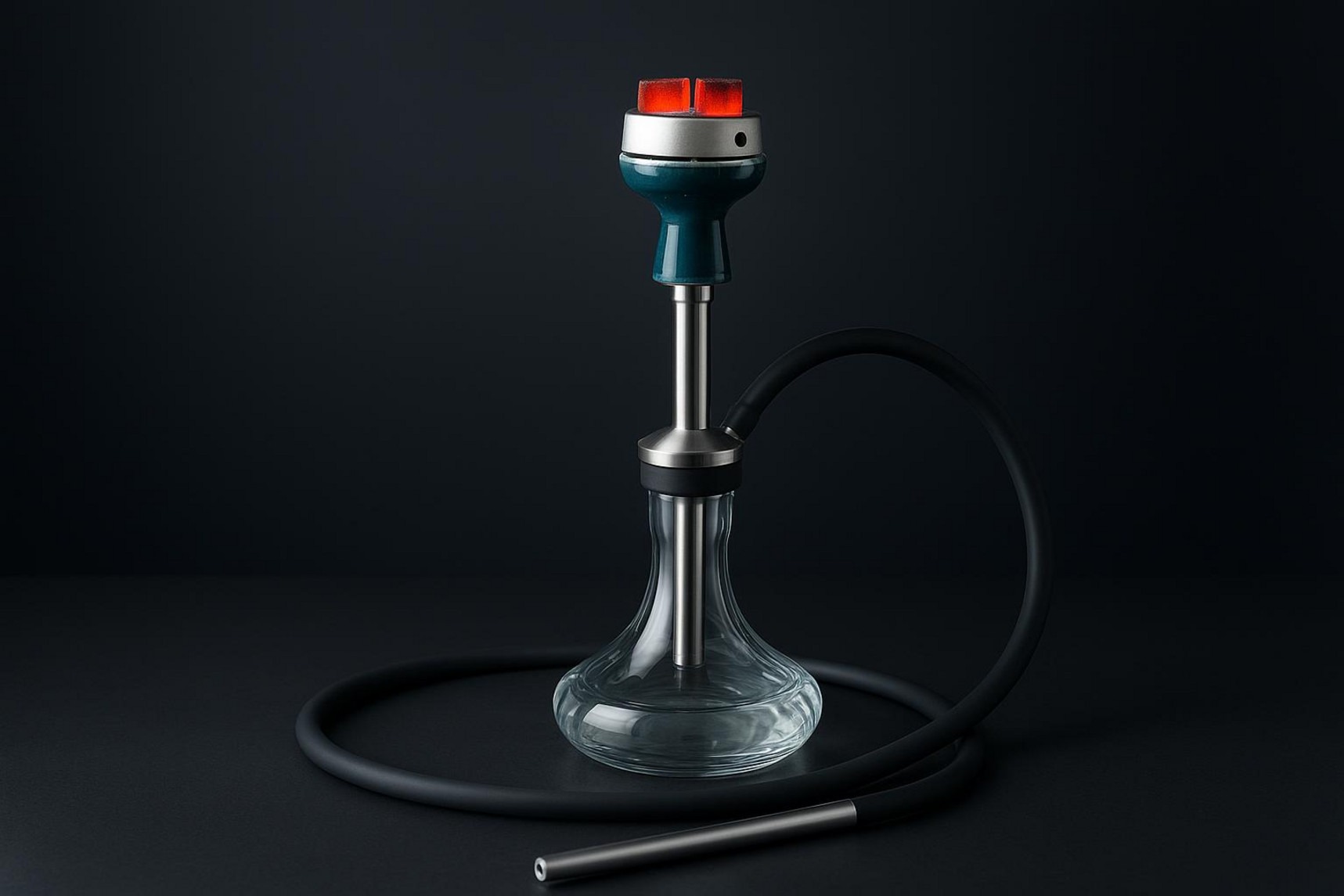
Different hookah parts work together as one air and heat system. Changing one piece can alter airflow resistance, heat control, smoke temperature, and flavor. These parts are more than decorative add-ons. The bowl’s ability to hold heat, the amount of water in the base, and the stem’s inner diameter all affect the pressure inside the hookah and how vapor forms, cools, and reaches the smoker.
When putting a hookah together, many users find that expensive components cannot fix a poor seal or a bowl that does not match the rest of the setup. Choosing compatible hookah parts can change a difficult session with harsh smoke and a tight draw into an easy session with clear flavor. Once you know how the parts work together, you can adjust your setup for thick clouds, distinct flavor, and steady performance.
What Does Each Hookah Part Do?
A hookah works through negative air pressure. When you inhale through the mouthpiece, you create lower pressure inside the sealed base. This pulls fresh air over the hot charcoal and through the shisha tobacco. The heat turns the flavor syrup and glycerin into vapor without setting the tobacco leaf on fire. The vapor then moves down the center stem, passes through the water, rises into the open space in the base, and leaves through the hose port.
Every part has a place along this route. The bowl holds the shisha and provides the main heat zone. The tray catches loose ash and charcoal. The stem forms the main passage for air and smoke. The base cools the smoke and controls the water resistance. The purge valve removes old smoke, while the hose carries the cooled vapor to the user. A problem at any point-such as an air leak, lost heat, or a blockage-can affect the whole session.
How Air, Water, Heat, and Smoke Move Through the Setup
The process starts at the top of the hookah. Charcoal placed on foil or inside a heat management device (HMD) sends heat into the tobacco through direct contact and moving air. As you inhale, hot air passes over the leaves and reaches about 260°C to 320°C. This releases the glycerin, flavor compounds, and moisture as a thick aerosol. The smoke then enters the upper stem at high speed and starts to cool as it touches the metal inside the stem.
When the smoke reaches the water, it meets resistance from the liquid. It leaves the submerged end of the downstem as expanding bubbles. The water takes in some heat and catches larger ash particles. After the bubbles reach the surface, the cooled vapor collects for a short time in the open space above the water. It then moves through the hose and mouthpiece to the smoker.
Which Parts Affect Flavor, Smoke Density, Draw, and Session Length?
Different hardware groups control different parts of the smoking experience. Bowl material, bowl shape, and heat equipment have the strongest effect on flavor and session time. A thick clay bowl holds heat and spreads it across the shisha instead of burning the top layer. This helps protect lighter flavor notes and can keep a session going for more than an hour.
Draw resistance, also called the tightness or openness of the pull, depends mainly on the inner stem size, the depth of the downstem, and the hose diameter. A wide downstem paired with a wide silicone hose creates little resistance. The open space inside the base also gives the vapor room to collect before it reaches the mouthpiece, which can make the clouds appear thicker.
How the Hookah Base Affects Stability, Filtration, and Draw
The base, often made from thick blown glass or heavy crystal, supports the whole hookah and holds the water. A tall stem and heavy tray can raise the hookah’s center of gravity, so a broad, stable base helps stop it from tipping when the hose is passed around. The shape inside the glass also controls how much water the base can hold and how much open space is left for smoke.
The base also makes it easier to inspect the setup. Clear glass lets you check the water level, see whether the base is clean, and watch the smoke move through the chamber. Acrylic and opaque bases can hide the waterline, which makes water adjustment and cleaning less precise.
Base Size and Water Capacity
The inside volume of the base affects both the draw and how vapor gathers. Small bases that hold about 300 to 600 ml of water fill with smoke very quickly after the first pull, giving a fast and direct response. Their smaller water volume can also warm up sooner during a long session, which reduces their cooling effect over time.
Large bases that hold about 1,000 to 1,750 ml or more contain more water and stay cooler for longer, sometimes through a two-hour session. Their larger open space also gives cooled vapor more room to gather and condense. This can create very thick clouds. Clearing old smoke through the purge valve may take a little more force because more air must leave the larger chamber.
How Water Level Changes Airflow and Smoothness
The amount of downstem that sits below the water controls the starting level of draw resistance. A deeper stem requires more lung pressure to push air through the water and begin bubbling. For many hookahs, the downstem tip should sit about 1.5 to 2 centimeters, or roughly half to three-quarters of an inch, below the water surface.
If the base has too little water, the downstem barely reaches the liquid. This can create rough, dry bubbling and gives the water less chance to cool the smoke. Too much water makes the draw heavy and raises the chance that water will travel into the hose port, filling the silicone hose and interrupting the session.
How the Stem and Downstem Control Airflow and Smoke Cooling
The stem forms the main support and passage of the hookah. It carries smoke from the bowl port down toward the water. It also works as a heat sink. As hot vapor moves through the metal tube, heat passes through the walls and escapes into the surrounding air. A stem made from high-grade V2A or 304 stainless steel can handle this repeated heat transfer without rust, surface damage, or a metallic taste.
Manufacturers pay close attention to the inside shape of modern stems. A smooth, open bore creates less friction and lowers the pressure drop. This lets the smoker inhale naturally instead of pulling against narrow sections inside the pipe.
Stem Height and Overall Hookah Performance
Stem height changes how long smoke travels before reaching the water. Tall stems, usually about 50 to 70 centimeters, give the hot vapor more contact with the metal surface. This can lower the temperature before the smoke enters the water. The longer path also gives tiny vapor droplets time to join together, creating a smooth and steady draw.
Small desktop stems, often about 30 to 45 centimeters, give the smoke less travel distance. They can offer stronger flavor clarity and a sharper throat feel. Since their outer walls remove less heat, they work well with an effective water base and a diffuser. This combination can provide a smooth, open pull while taking up less room and being easier to carry.
Downstem Length and Water Contact
The downstem is the lower part of the stem that sits under the water. Its inner width, often between 9 and 15 millimeters, has a major effect on how open or restricted the hookah feels. A narrow downstem pushes air through a smaller opening, which can focus the flavor but also requires more effort from the smoker.
Many newer downstems have built-in or screw-on diffusers. A diffuser is a perforated cap at the submerged tip. It breaks one large bubble into many smaller bubbles. This gives the smoke more contact with the water, which can improve cooling, lower the bubbling sound, and create a softer pull with less vibration.
How the Bowl Changes Flavor, Heat Distribution, and Session Length
If the stem is the hookah’s main support, the bowl is its cooking area. It sits below the charcoal and works like a small oven. Its material, thickness, ability to carry heat, and shape all affect how the shisha warms. A thin ceramic bowl can form very hot spots that burn the tobacco quickly. Dense stoneware or clay absorbs heat more slowly and spreads it through the pack.
The bowl’s shape also decides whether the shisha keeps its syrup or lets it drain away. Traditional bowls and raised funnel-style designs handle juice in different ways. This choice affects how clean the pipe stays and how much flavor remains in each puff.
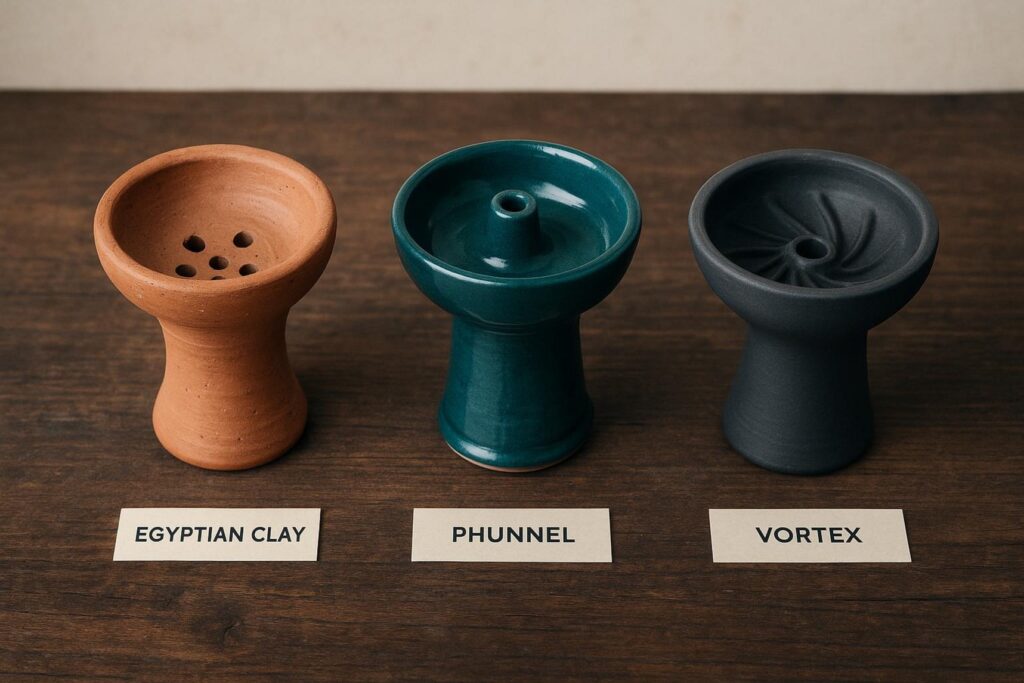
Traditional, Phunnel, and Vortex Bowl Designs
Traditional bowls, including many Egyptian and Turkish clay bowls, have several holes across the curved bottom. Hot air moves down through the tobacco and exits through these openings. This setup can give strong flavor and a firm throat hit, which suits drier dark-leaf blends. Wet shisha with a lot of molasses may drip through the holes, though, leaving residue in the stem and base.
Phunnel bowls use one raised opening in the center. The raised section creates a ring-shaped area that holds the syrup, honey, and glycerin inside the bowl. As the tobacco heats, these liquids turn into vapor instead of running into the pipe. This supports thick clouds and keeps the stem cleaner. Vortex bowls take a middle position. They have a solid raised center with holes on the sides, so they hold a fair amount of juice while keeping some of the draw feel of a traditional bowl.
Bowl Size, Tobacco Capacity, and Session Duration
A bowl’s depth and width determine how much tobacco it can hold, which affects how long the session lasts. Small, shallow bowls made for 10 to 15 grams of shisha suit solo sessions of about 45 minutes. They use less tobacco and reach the working temperature quickly.
Large bowls that hold 20 to 30 grams are better suited to group sessions of up to two hours. Their extra clay takes more charcoal heat at the start, since the bowl walls need time to warm. After reaching temperature, the bowl acts as a steady heat store and helps prevent sudden changes, keeping the flavor more even from the first puff to the last.
How Tobacco Packing Determines Airflow and Smoke Quality
Even with high-quality hardware, the way you pack the bowl controls airflow through the tobacco. Shisha is made from cut leaves, molasses, honey, and vegetable glycerin. If these materials are packed loosely, hot air can pass between the leaves. If they are pressed too firmly, the pack can become a dense plug that blocks the air.
A good pack matches the tobacco type and bowl shape. Blonde-leaf tobacco usually works well with a loose pack. Unwashed dark tobacco with high nicotine content often works better when pressed more firmly, which slows the heating process.
How Fluff, Semi-Dense, and Dense Packs Affect the Draw
A fluff pack means placing the tobacco lightly in the bowl without pressing it down. The leaves should sit just below the rim and keep their natural spaces. These open channels allow air to move freely and carry heat through the pack. The draw feels very light, clouds form quickly, and sweet modern flavors can come through clearly.
A semi-dense pack uses gentle pressure to make the tobacco level and a little firmer. It balances heat moving through the air with heat moving through the tobacco itself. A dense pack, often used with dark-leaf brands such as Tangiers, presses the shisha tightly to remove air gaps. Heat then travels through the bowl walls and into the tobacco, creating a strong, heavy smoke and a slow release of nicotine.
Common Packing Errors That Cause Harsh Smoke
New users often fill the bowl so high that the tobacco touches the foil or the metal bottom of an HMD. This direct contact burns the top leaves very quickly and creates a sharp, burnt taste that can spoil the session within ten minutes.
Another error is placing tobacco unevenly around the raised center of a phunnel bowl or covering the holes in an Egyptian bowl. Tobacco over the air openings creates strong resistance and makes the smoker pull too hard. The extra suction sends hot air through one small area, burning that pocket while the rest of the tobacco stays cool.
How Heat Management and Charcoal Affect Flavor and Clouds
Charcoal supplies the heat needed to create vapor. If the heat is too low or unstable, the glycerin will not vaporize well, leaving thin clouds and weak flavor. Too much heat burns the sugars in the molasses and creates harsh smoke with high carbon monoxide levels.
Natural coconut charcoal is a better choice than quick-light charcoal that contains sulfur and other starting chemicals. Coconut coals burn at a steady, high temperature without adding the smell of ignition chemicals. This lets the smoker taste the shisha blend instead of the fuel.
Foil Versus a Heat Management Device
Aluminum foil remains a traditional heat method. When pulled tightly over the bowl and pierced with carefully placed holes, it sends heat straight into the tobacco. Foil responds quickly, so moving a coal to the edge can cool the pack right away. It also needs regular attention, including ash removal, and wind can cause uneven heating during outdoor sessions.
Heat management devices, such as the Kaloud Lotus and other machined aluminum boxes available at Shisha Boutique, replace foil with a metal chamber. They use air channels and vents to control the heat. The HMD softens the sudden heat from fresh coals and spreads warmth across the bowl. It also keeps ash from falling into the tobacco and makes the session easier to repeat with similar results.
Charcoal Quantity, Position, and Heat Distribution
Heat control depends on both the number of coals and where they sit. Three natural cube coals placed around the outside of an HMD or foiled bowl gently warm the clay from the edge inward. Coals grouped in the center can focus too much heat over the air opening and burn the middle before the outer tobacco has warmed.
Each deep inhale pulls room air across the coals. This can raise their temperature while cooling the tobacco below by about 50°C for a short time. After the pull ends, the heat rises again. To manage this cycle, move the coals outward as the bowl gets hot and tap ash from them every 20 to 30 minutes so air can keep reaching the coal surface.
How the Hose and Mouthpiece Affect Draw, Comfort, and Hygiene
The hose and mouthpiece are the parts the smoker holds and uses directly. Since they carry the cooled vapor during the final part of the journey, they should create little friction and should not add old smells to the smoke. Hose length, weight, and flexibility affect whether the hookah stays steady beside you or gets pulled across the table each time the hose moves.
Older hoses were made with leather, cardboard, and metal wire inside. Most modern hoses use food-grade medical silicone instead. Silicone lasts longer, bends easily, and is much easier to keep clean.
Hose Diameter, Length, and Airflow Resistance
The inside width of the hose adds to the total pressure loss in the hookah. A hose narrower than 10 millimeters feels tight, much like drinking through a thin straw. A wide hose measuring about 12 to 15 millimeters lets vapor move with little effort and works well with an open stainless steel downstem.
Most hoses are about 150 to 180 centimeters long. A hose that is too long adds extra drag and creates more unused space inside the system. A hose that is too short can pull the hookah over if someone leans away while holding it. An aluminum or stainless steel mouthpiece with a comfortable weight gives good control without tiring the hand during a long session.
Washable and Non-Washable Hookah Hoses
Traditional non-washable hoses have metal coils inside paper or leather. Water can rust these coils, and small pieces of metal may later reach the smoker’s mouth. These materials can also hold strong flavors such as double apple and mint. This flavor buildup can make the hose unsuitable for lighter citrus or flower-based blends.
Modern silicone hoses do not absorb liquid, bend easily, and can be washed. You can rinse one with warm water and lemon juice after each session to remove leftover smells. This helps a new bowl of lemon-lime taste clean after a strong spiced vanilla session.
How Grommets, Ports, and Seals Prevent Air Leaks
A hookah needs a sealed air path to work correctly. If air enters through a gap in the stem, base, or hose connection, the pressure from the smoker’s pull becomes weaker. Instead of drawing hot air through the bowl, the hookah pulls cool room air through the leak. The result is usually thin smoke and a weak draw.
Grommets are small silicone or rubber seals that sit between parts made from metal, glass, and ceramic. They fill small gaps and help the connections stay airtight.
Base, Bowl, and Hose Grommets
Three main seals protect the air path: the base grommet, the bowl grommet, and the hose connector seal. The base grommet should hold the stem firmly in the glass neck without allowing it to move. A loose seal lets air escape around the edge. A seal that is too tight can put pressure on the glass neck and may crack it when the stem is pushed in.
The bowl grommet sits close to the charcoal and must handle high heat. A ribbed, heat-resistant silicone grommet keeps the bowl from sliding off the stem and stops air from entering under the bowl. Tapered hose grommets and O-rings used with magnetic or ground-joint connectors serve the same purpose by keeping each puff connected to the air space in the base.
Ways to Test a Hookah for Leaks
Testing the seal before every session is a useful habit. Put the hookah together without tobacco or charcoal. Cover the bowl opening completely with your thumb, then try to inhale through the mouthpiece.
A sealed hookah should offer full resistance. No air should enter, and your thumb should feel firmly pulled against the bowl port. If air does move, listen for a hiss. The sound may come from a poorly placed hose grommet, a purge valve ball that is not seated correctly, or a base seal that needs adjustment before the charcoal is lit.
Common Hookah Setup Problems and Their Causes
When a session does not go well, look at the hookah as one connected system instead of blaming one part immediately. Most problems fall into two groups: weak clouds caused by low heat or lost pressure, and harsh hits caused by too much heat or old smoke in the base. Recognizing the signs can help you correct the problem without throwing away the tobacco.
Many session problems come from simple mistakes with assembly, water height, or charcoal timing. Once the cause is clear, these issues often take only a few seconds to fix.
Why the Hookah Has Weak Smoke
If the draw feels open but the exhaled vapor is thin, the tobacco may not be receiving enough heat. The coals may have become too small, may be covered in ash, or may be sitting too far from the bowl’s center. The bowl may also need more time to heat; five minutes of preheating before the first pull can make a clear difference.
If the coals are hot and glowing, check the seals. A loose hose grommet, a purge ball stuck partly open, or a missing bowl seal can bring room air into the stem and weaken the smoke. Also check the pack. A very loose pack placed too far below the rim may let hot air pass over the tobacco without heating it properly.
Why Smoke Tastes Harsh or Burnt
A sharp, peppery feeling in the throat usually means the tobacco is too hot. This can happen when too many coals are used, when they sit directly over the center, or when the leaves touch the foil or HMD. Remove one coal, open the HMD vents, and gently blow through the hose to use the purge valve.
Purging pushes the hot, old smoke out of the base and brings cooler air down through the hookah. This helps lower the bowl temperature below the point where the tobacco burns. Keep the purge chamber free of mineral buildup so the glass or Delrin ball can move freely. A clear valve lets you cool an overheated bowl quickly and continue the session with smoother smoke.
