


On the night of 14 September 1607 a ship lay at anchor off Rathmullan, on the western shore of Lough Swilly in Donegal, and about ninety people went aboard her in the dark. Among them were Hugh O’Neill, Earl of Tyrone, the last great Gaelic lord of Ireland, and Rory O’Donnell, Earl of Tyrconnell, with their wives, their children and their households. They had been the most powerful men in Ulster. They were leaving it for ever.
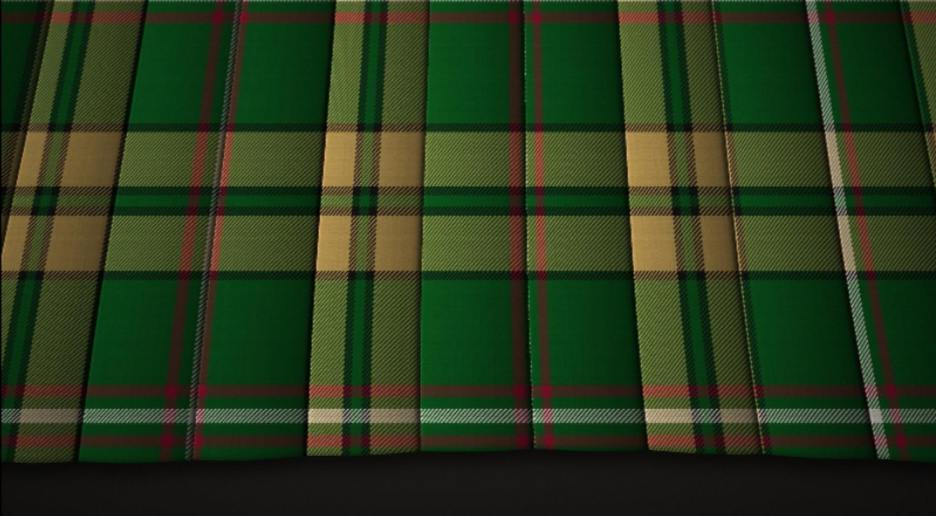
Six years before, O’Neill had come within a battle of driving the English out of Ireland. He had fought Elizabeth’s armies to a standstill for nine years, destroyed one at the Yellow Ford in 1598, in the worst defeat the English ever suffered in Ireland, and with Spanish help had come south to Kinsale in 1601 to finish the war. He was a formidable man: educated in the Pale as an English gentleman, made an earl by the Queen, and then, when it suited him, the greatest Gaelic war leader of the age. The English never understood him and never forgave him. He lost at Kinsale, made his peace, kept his earldom, and spent six years finding that a Gaelic lord under English law was a man being slowly strangled with paper. When word reached him that he was to be arrested, he rode for the coast. Four centuries later his name would be given a cloth, the green and saffron O’Neill tartan.
The ship went to France, and the earls went on to Rome, where the Pope gave them a house and a pension, and where O’Neill died in 1616, old, half blind and never allowed to go home. The lands they had left were declared forfeit, and the Crown filled them with Protestant settlers from Scotland and England. The Plantation of Ulster, and everything that followed from it, begins on the beach at Rathmullan.
The red hand
The O’Neills had been kings in Ulster for a thousand years before that night, and their symbol was the Red Hand. The story of how they got it is a legend, and one of the best in Ireland. A chief, it is said, promised the kingdom to whichever of his sons first touched the shore of Ulster from the sea. As the boats raced in, one son, seeing another pull ahead, drew his sword, cut off his own hand, and threw it onto the beach ahead of everyone. The hand is still on the arms of Ulster and of the O’Neills, and on the flag of Tyrone, and it has been claimed by every side in every Ulster quarrel since. Whether any O’Neill ever cut off a hand is not a question history can answer.
What history can say is that the O’Neills of Tyrone and of Clandeboye gave Ireland high kings, that Shane O’Neill fought Elizabeth to a draw before Hugh did, and that the name is among the commonest in Ireland and in every country the Irish went to. The clan’s motto, Lámh Dhearg Éireann Abú, is the Red Hand of Ireland for ever.
A tartan for a wedding
Ireland had no tartans. The Gaelic lords of Ulster wore saffron shirts and mantles, not checks, and the idea of an Irish clan tartan is a twentieth-century one, borrowed from Scotland by the diaspora, who saw what the Highland clans had and wanted the same for their own names. Most of the Irish tartans in the books are district tartans, one for each county, designed in the 1990s and worn mostly by pipe bands and at weddings in America. Tyrone’s is green and gold. Donegal’s is green, white and a soft brown. A few belong to families, and the O’Neill is one of them.
The archives record its origin with unusual precision. It was designed for the wedding of Timothy Powers O’Neill on 27 May 2000, and it incorporates the traditional Irish colours of saffron and green with the red that is prominent in the O’Neill crest. It was woven by Strathmore Woollens in Angus, and it is, the register says, for use by anyone with the name O’Neill. An older sett associated with a Tyrone pipe band in New York and a variant recorded in Australia sit alongside it in the archive, in the same colours.
It is a warm and unusual tartan. The ground is green, crossed by broad bands of a golden saffron, with a line of red through the design and fine lines of green through the saffron, so that from a distance it reads as green and gold with a flicker of the Red Hand. Retailers offer O’Neill tartan made to order as kilts, skirts, sashes, scarves and ties, or by the yard, and O’Neill, O’Neil, Neill, Neil and MacNeill all wear it. Set into the back pleats of denim kilts, it shows the green and gold only when the wearer moves.
Derry, a Saturday night in August
Ciarán O’Neill is thirty-one, plays the bouzouki in a trad band in Derry, and has views about kilts that took him some years to arrive at. Irishmen, in his experience, did not wear them, except in pipe bands and at American weddings, and the saffron kilt of the pipe bands was, to his eye, a thing you wore in a line with twenty others and not on your own.
What changed his mind was denim.
He had a gig at a festival in Glasgow three summers ago and was given a bed by a Scottish fiddler who wore a denim kilt to breakfast, and Ciarán, who had spent his life in jeans on stage, saw the point at once. It was a kilt, with the pleats and the swing, and it was also just clothes: dark blue, with belt loops and pockets, that you could put on at nine in the morning for a soundcheck and still be wearing at three the next morning in a session, and wash in a machine.
He has two now, both from Scottish Kilt, whose denim kilts are described as having knife-pleated backs, belt loops and real pockets, hard-wearing everyday kilts that fade with wear, in classic and dark washes, made to fit. One is plain dark denim for the road. The other is the one he wears on stage: a hybrid, the denim body in a dark wash with the pleats at the back in the O’Neill tartan, green and saffron with the red line, so that when he stands still it is a denim kilt and when he moves the colours of Tyrone come out of it.
Both are cut to his waist, hips and length like any of the outfitter’s kilts, and the difference between a made-to-measure denim kilt and one off a rail is the same as the difference in a pair of jeans, which is everything. Denim, he has found, is the one kilt cloth nobody has to explain. A wool kilt in Derry gets a question. A denim one gets a nod.
Tonight the band is playing a bar on Waterloo Street, and he is on the low stage in the hybrid with a black T-shirt, black boots, and the bouzouki, and between sets a woman from Boston, who has been singing along to things she half knows, asks about the tartan.
“O’Neill. It’s Irish. Sort of.”
“I thought the Irish didn’t have tartans.”
“We didn’t. Somebody made this one for a wedding in 2000. Green and saffron and the red for the hand.” He picks up his pint. “Hugh O’Neill would have had no idea what it was. He wore a saffron shirt and fought the English for nine years and left from a beach up the road there. Rathmullan. Never came back.”
“So why wear it?”
“Because it’s my name and it’s got the hand in it,” says Ciarán. “And because the denim’s comfortable. Both. You can have both.”
The Red Hand for ever
Hugh O’Neill was the last man who might have kept Ireland Gaelic, and he left it in the dark from a Donegal beach and died in Rome. Four hundred years later a family in America gave his name a tartan for a wedding, in the colours of the shirts his men wore and the hand on his shield, and the name has one now whether he would have understood it or not.
It is green and saffron with a line of red, and it looks entirely at home in the pleats of a dark denim kilt on a bouzouki player on Waterloo Street on a Saturday night, twenty miles from Rathmullan, with the Red Hand coming and going as he moves.
