


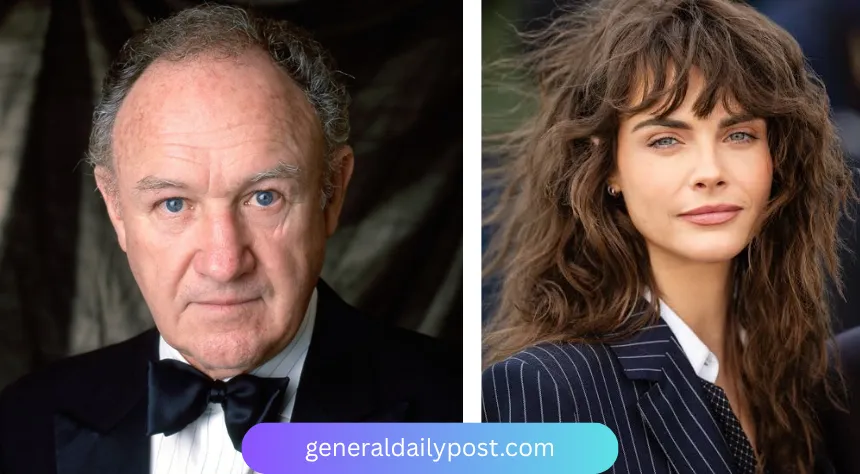
Cara Delevingne and Gene Hackman represent different generations of entertainment, yet their careers offer an interesting look at talent, public image, and creative ambition. Delevingne first became internationally known through fashion before expanding into films, television, and theatre. Hackman built his reputation through powerful screen performances, becoming a two-time Academy Award winner. Their stories belong together as a comparison of two distinct professional journeys, rather than as a shared biography. Looking at their backgrounds, breakthrough moments, and memorable work helps explain how each found a recognizable place in popular culture. It also reveals how differently success can develop across changing industries and generations.
Understanding the Cara Delevingne and Gene Hackman Comparison
The clearest connection between Cara Delevingne and Gene Hackman is their work as performers. Their established career records do not show a shared film, and this comparison should not suggest a family relationship or professional partnership. Hackman’s final acting film appeared in 2004, several years before Delevingne’s appearance in Anna Karenina in 2012. They also entered entertainment through different doors: fashion gave Delevingne an early public platform, while Hackman spent years building experience before achieving major recognition. Comparing them is useful because it highlights two routes toward screen visibility—one shaped by modeling and modern celebrity, the other by theatre training, supporting roles, and gradual professional development.
Cara Delevingne’s Early Life and Background
Cara Jocelyn Delevingne was born on August 12, 1992, in London, England. She grew up in a well-connected family with her older sisters, Chloe and Poppy. Her father, Charles Delevingne, worked in property development, while her mother, Pandora, came from a prominent British family. Those advantages are part of her background, but they do not explain every part of her later experience. Delevingne has acknowledged her privileged upbringing while discussing personal difficulties that existed alongside it. Understanding both sides gives readers a more balanced introduction to her life. Her story involves access and opportunity, but also the challenge of developing an identity under growing public attention.
Fashion Success and British Fashion Awards
Delevingne’s early fashion career brought work with major names, including Burberry, Chanel, and Fendi. Her expressive face, strong eyebrows, and lively public personality helped make her especially recognizable. She won Model of the Year at the British Fashion Awards in 2012 and 2014, establishing that her visibility extended beyond a single successful campaign. Contemporary fashion coverage described her rapid rise as a significant industry phenomenon. Fashion also gave her experience working with photographers, stylists, and creative teams, although those skills differ from acting. This period remains essential to her biography because it explains how she first built an international audience before taking on more substantial entertainment projects.

Cara Delevingne’s Move Into Film
Cara Delevingne and Gene Hackman Delevingne appeared in Joe Wright’s Anna Karenina in 2012, then gained greater acting visibility as Margo Roth Spiegelman in Paper Towns in 2015. Her subsequent roles included Enchantress in Suicide Squad in 2016 and Laureline in Valerian and the City of a Thousand Planets in 2017. These projects placed her in different storytelling environments, from young-adult mystery to comic-book action and science fiction. They also made her career more difficult to describe through modeling alone. For readers comparing Cara Delevingne and Gene Hackman, this transition is an important distinction: she entered film with an existing public identity, making the development of a separate acting reputation a central professional challenge.
Television, Cabaret, and Creative Expansion
Television gave Delevingne another substantial platform through Vignette Stonemoss in Carnival Row, alongside Orlando Bloom. The fantasy series offered an extended character journey rather than the shorter structure of a feature film. She later made her West End stage debut as Sally Bowles in Cabaret, performing at London’s Kit Kat Club from March 11 to June 1, 2024. That move added live musical theatre to her professional experience. Each format brings different demands: television develops stories across episodes, while theatre requires performers to sustain a production in front of an audience. Together, these credits show a career expanding across several forms of performance rather than following one fixed path.
Personal Growth and Public Advocacy
Delevingne has spoken publicly about mental health, addiction, and recovery, adding an important personal dimension to her public story. In her 2023 Vogue interview, she discussed seeking treatment in 2022 and making changes to support her well-being. Her comments presented recovery as an ongoing process, rather than a simple transformation completed for an audience. She has also discussed sexuality and self-acceptance in interviews and public-facing work. These subjects deserve careful treatment because personal disclosures should not become entertainment speculation. Within her biography, their significance lies in her willingness to describe difficult experiences directly, offering readers a fuller understanding of the person behind fashion campaigns and acting credits.
Gene Hackman’s Early Life and Training
Gene Hackman was born on January 30, 1930, in San Bernardino, California, and spent much of his childhood in Danville, Illinois. His journey toward acting included service in the United States Marine Corps, followed by training and years of uncertain employment. At the Pasadena Playhouse, he encountered fellow aspiring actor Dustin Hoffman, who became a longtime friend. Success came gradually through stage work, television appearances, and film opportunities. This background gives the Cara Delevingne and Gene Hackman comparison an especially clear contrast in timing. Hackman’s major recognition arrived after an extended apprenticeship, demonstrating how a long period of limited visibility can precede a highly influential entertainment career.
Bonnie and Clyde and His Hollywood Breakthrough
Cara Delevingne and Gene Hackman performance as Buck Barrow in Bonnie and Clyde in 1967 became a major career breakthrough and earned an Academy Award nomination for supporting actor. The film gave him a prominent place within a celebrated ensemble and helped establish his appeal as a character actor. His later nomination for I Never Sang for My Father in 1970 further demonstrated his dramatic range. These achievements matter because his rise did not depend on playing a conventional glamorous leading man. He could make difficult, flawed, or ordinary people compelling. His developing reputation rested on the sense that a character had a life beyond the immediate scene, even when that character occupied limited screen time.
The French Connection and The Conversation
Hackman reached a defining milestone with Jimmy “Popeye” Doyle in The French Connection in 1971, winning Best Actor at the 1972 Academy Awards. The role remains closely associated with his forceful screen presence. He then offered a different kind of performance as surveillance specialist Harry Caul in Francis Ford Coppola’s The Conversation in 1974. Watching the two films together provides a useful introduction to his range. Doyle pushes outward through confrontation, while Caul draws viewers toward secrecy and unease. The contrast shows why describing Hackman only as an actor of authority misses part of his appeal: he could also communicate vulnerability, uncertainty, and intense inward tension through restrained choices.
Unforgiven, Superman, and Remarkable Versatility
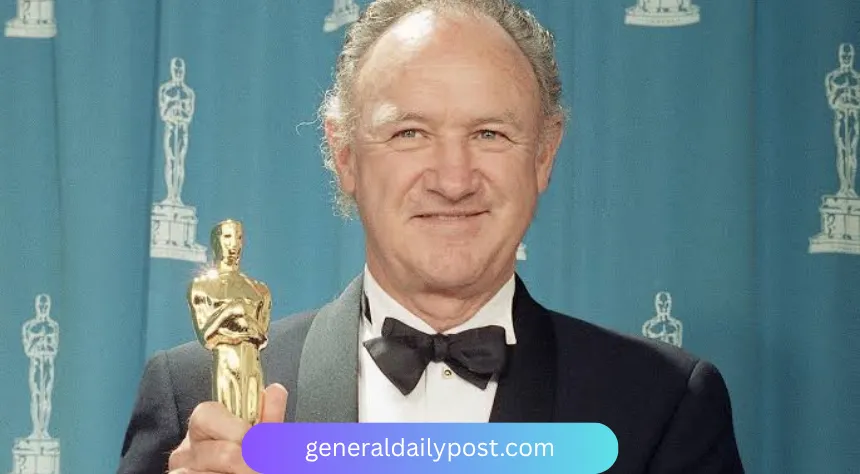
Hackman won his second Oscar for playing Little Bill Daggett in Unforgiven in 1992, receiving Best Supporting Actor at the 1993 ceremony. The role added another memorable authority figure to his filmography, although the character’s violence makes that authority deeply troubling. Elsewhere, Hackman brought comic confidence to Lex Luthor in the Superman films and demonstrated further comic range in Get Shorty, The Birdcage, and The Royal Tenenbaums. These performances explain why his reputation extends beyond crime thrillers and serious drama. His work could support tension, satire, family conflict, or broad entertainment. Across those settings, timing and responsiveness often mattered as much as the commanding voice audiences immediately recognized.
Retirement, Writing, and Gene Hackman’s Death
final acting film was Welcome to Mooseport in 2004. After leaving screen acting, he devoted time to writing, including novels produced with Daniel Lenihan. This later creative work is an important part of his life beyond Hollywood. Hackman died in February 2025 at age 95; he and his wife, Betsy Arakawa, were found at their Santa Fe home on February 26. Authorities identified heart disease as his cause of death, with advanced Alzheimer’s disease contributing, and estimated that he died around February 18. The distinction between the discovery date and estimated death date matters when reporting his biography accurately and respectfully.
Conclusion: What Cara Delevingne and Gene Hackman Represent
The stories of Cara Delevingne and Gene Hackman demonstrate that entertainment careers can develop through very different combinations of opportunity, persistence, and creative choice. Delevingne’s work stretches across modeling, film, television, and theatre, with her public reflections adding another dimension to that journey. Hackman left a completed body of screen performances that rewards attention across genres and decades. Their achievements should be understood within their own contexts rather than treated as equivalent careers. The most useful lesson from comparing them is that a recognizable public image tells only part of a professional story. Looking closely at individual roles, turning points, and decisions provides a richer understanding of both performers.
Frequently Asked Questions
Who Are Cara Delevingne and Gene Hackman?
Cara Delevingne is an English model and actress, while Gene Hackman was an American actor and novelist. Delevingne first gained major international attention through fashion and later developed a screen and stage career. Hackman became widely respected for performances in films including The French Connection, The Conversation, and Unforgiven. Their names can be discussed together in a comparative biography, but each has a separate career history. Readers approaching the subject for the first time should understand that distinction. The comparison explores how two performers from different generations built recognition, changed professional direction, and developed work that audiences associate with their individual names.
Were Cara Delevingne and Gene Hackman Related?
There is no established family relationship between Cara Delevingne and Gene Hackman in the biographical records reviewed for this article. Their inclusion together is an editorial comparison, rather than evidence of a personal connection. They came from different families, countries, and professional generations. Delevingne’s early recognition developed in British and international fashion, while Hackman built his reputation primarily through American film acting. A combined search phrase can sometimes create the impression that two celebrities share a private or professional history. In this case, readers should understand their biographies independently and avoid interpreting the paired names as proof of kinship, friendship, or a shared personal story.
Did Cara Delevingne and Gene Hackman Work Together?
Their established filmographies do not show a shared acting project. Hackman’s final film performance appeared in 2004, while Delevingne’s appearance in Anna Karenina came in 2012. That timeline helps explain why their careers belong to different periods of screen entertainment. A comparison can still be informative without a direct collaboration: it can examine professional beginnings, memorable characters, creative changes, and public recognition. However, an article should clearly identify those connections as themes chosen for discussion. Readers looking for a joint film, confirmed partnership, or documented shared production should not mistake this comparative biography for evidence that such a project exists.
What Is Cara Delevingne Best Known For?
Cara Delevingne is best known for her modeling career and her work in film and television. Her widely recognized screen credits include Paper Towns, Suicide Squad, Valerian and the City of a Thousand Planets, and Carnival Row. Her 2024 role in Cabaret also introduced her work to West End audiences. Fashion remains part of her professional identity: L’Oréal Paris lists her among its global ambassadors. These different activities explain why a single label does not fully describe her career. Depending on how audiences first encountered her, they may know her primarily through a fashion campaign, a fictional character, or a live stage performance.
How Many Academy Awards Did Gene Hackman Win?
Gene Hackman won two Academy Awards from five nominations. His first win was Best Actor for The French Connection, presented in 1972 for the film released in 1971. His second was Best Supporting Actor for Unforgiven, presented in 1993 for the 1992 release. His other nominated performances were in Bonnie and Clyde, I Never Sang for My Father, and Mississippi Burning. Separating release years from ceremony years helps prevent a common source of confusion in entertainment biographies. The awards also illustrate his lasting recognition across different career periods, with more than two decades separating the films associated with his two Oscar-winning performances.
Why Is Gene Hackman Still Important to Film Audiences?
Gene Hackman remains important because his filmography offers a wide range of memorable performances, rather than one defining character alone. New viewers can approach his work through thrillers, westerns, superhero films, sports drama, or comedy. His performances also provide useful examples of how an actor can suggest confidence and uncertainty within the same character. Studying his work does not require assuming that every film or role achieved the same result. Instead, viewers can compare individual choices: a pause, a reaction, a sudden change in tone, or the way he responds to another performer. That variety helps explain why his work continues to invite discussion after his retirement and death.
