


Long before modern skincare labs and synthetic wax factories existed, beeswax was already a trusted companion of humankind. Produced naturally by honeybees, this golden, aromatic substance has been used for thousands of years in cosmetics, medicine, food preservation, and craftsmanship. Today, as people move toward natural and sustainable living, beeswax benefits are once again in the spotlight. From soothing dry skin to protecting furniture and preserving food without plastic, beeswax proves that nature’s oldest solutions are often still the best. This article explores the science, history, and everyday uses of beeswax in complete detail.
What Is Beeswax? Understanding Its Origin
Beeswax is a natural wax produced by honeybees, specifically secreted from special glands on the worker bee’s abdomen. Bees use this wax to build the honeycomb structure inside their hive, where honey is stored and larvae are raised. Once harvested, beeswax is cleaned, filtered, and molded into blocks, pellets, or sheets for commercial and household use. It typically ranges in color from pale yellow to deep amber, depending on the flowers the bees visited and the purity of the wax. Unlike synthetic waxes, beeswax is completely biodegradable, non-toxic, and rich in beneficial compounds that make it valuable across multiple industries.
How Bees Produce Beeswax
Worker bees consume honey and, through a metabolic process, convert sugars into wax through eight wax-producing glands located on the underside of their abdomen. The wax is initially secreted as tiny, clear flakes that harden upon contact with air. Bees then chew these flakes, mixing them with enzymes from their saliva, before shaping them into the perfect hexagonal cells of the honeycomb. It takes an estimated six to eight pounds of honey for bees to produce just one pound of beeswax, which explains why pure beeswax has historically been considered a precious and labor-intensive material.
A Brief History of Beeswax Usage
Beeswax has a remarkably long history of human use. Ancient Egyptians used it for mummification, cosmetics, and sealing writing tablets. The Greeks and Romans employed beeswax in art through the encaustic painting technique and for creating official seals on documents. In medieval Europe, beeswax candles were prized by churches and nobility because they burned cleaner and brighter than tallow candles. Historical records even mention beeswax being used as an early form of currency in trade. This centuries-old relevance highlights why beeswax remains a trusted natural material even in the era of synthetic alternatives, proving its versatility across cultures and centuries.
Nutritional and Chemical Composition of Beeswax
Beeswax is chemically composed of over 300 different compounds, including fatty acids, fatty alcohols, and esters. Its primary components are palmitate, palmitoleate, and oleate esters, which give beeswax its unique texture, melting point, and protective qualities. Unlike petroleum-based waxes, beeswax also contains natural antioxidants and trace amounts of propolis and pollen, contributing to its mild antibacterial and anti-inflammatory properties. This complex composition is what allows beeswax to form a breathable barrier on skin, unlike occlusive synthetic waxes that can clog pores. Understanding this chemistry helps explain why beeswax is so widely trusted in cosmetic formulations worldwide.
Top Beeswax Benefits for Skin
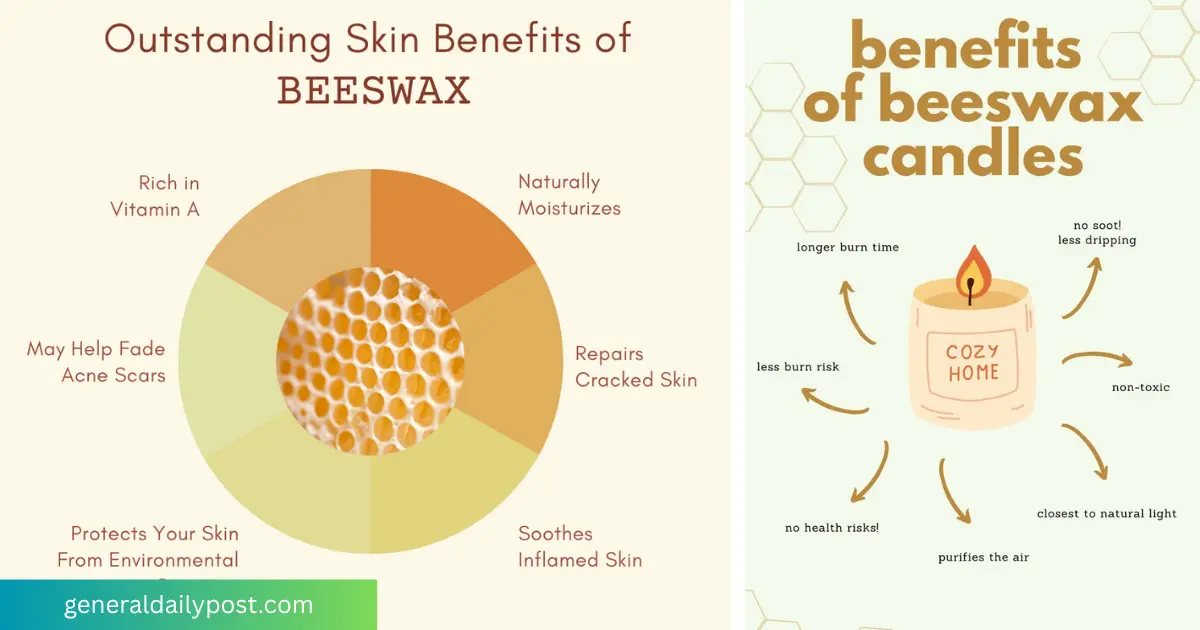
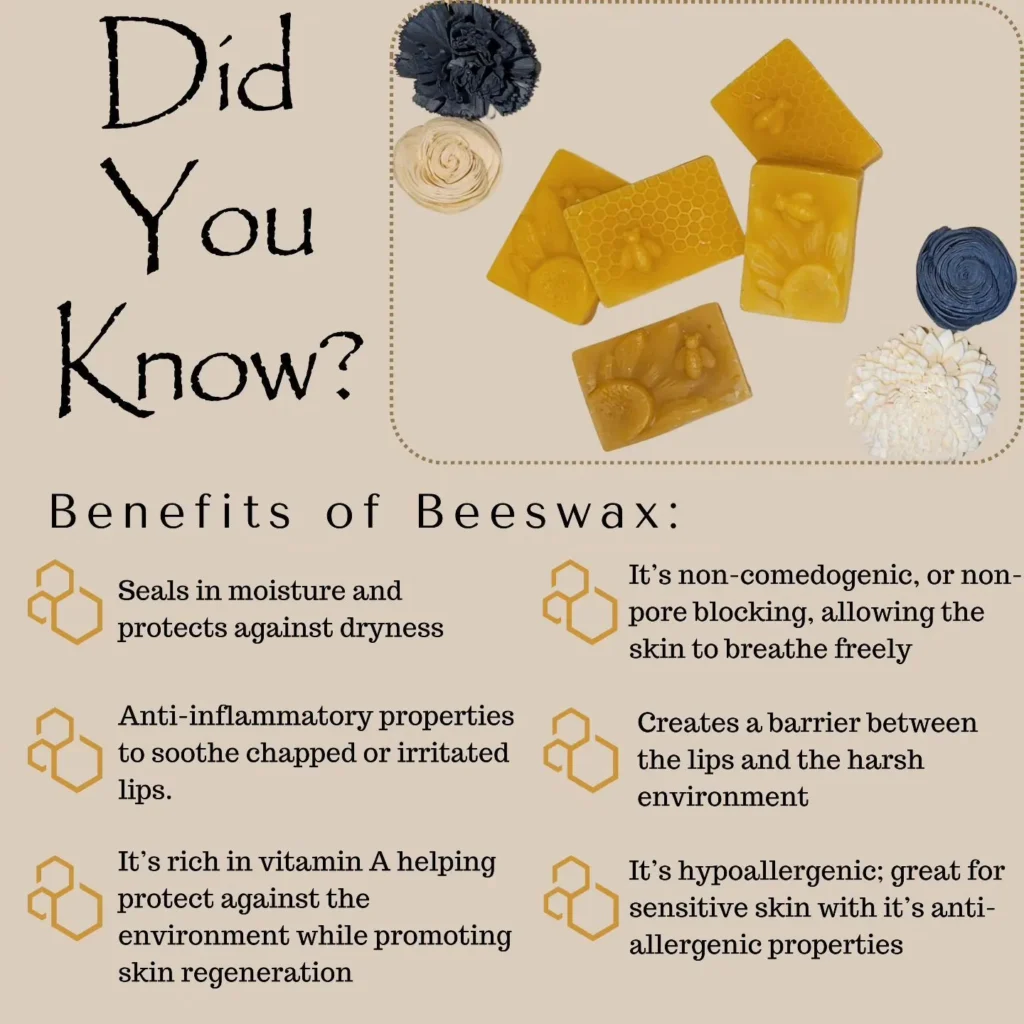
One of the most celebrated beeswax benefits lies in skincare. Beeswax is a common ingredient in lotions, balms, and creams because of its ability to lock in moisture while still allowing the skin to breathe. It forms a protective barrier that shields skin from environmental pollutants and irritants without suffocating pores. Additionally, beeswax contains vitamin A, which supports skin cell regeneration. Dermatologists often recommend beeswax-based products for people with sensitive or easily irritated skin because it is hypoallergenic and rarely causes reactions, making it a gentle yet highly effective natural skincare ingredient.
Beeswax as a Natural Moisturizer
Beeswax works as an emollient, meaning it softens and smooths the skin’s surface. When combined with oils like coconut or almond oil, it creates rich balms that seal in hydration for hours. Unlike some moisturizers that evaporate quickly, beeswax forms a semi-occlusive layer that slows water loss from the skin without blocking it entirely. This makes it ideal for dry climates, winter weather, or people with naturally dry skin types who need long-lasting hydration.
Beeswax for Healing Cracked Skin
For cracked heels, elbows, and rough patches, beeswax-based balms are a go-to remedy. The wax creates a soft, flexible seal over damaged skin, allowing the area underneath to heal while staying protected from friction, dirt, and moisture loss. Many foot creams and hand balms include beeswax specifically for this repairing effect.
Beeswax and Anti-Aging Properties
Thanks to its antioxidant content, beeswax helps combat free radical damage that accelerates visible signs of aging. Regular use in facial creams can improve skin elasticity and reduce the appearance of fine lines, making it a popular ingredient in natural anti-aging skincare lines.
Beeswax Benefits for Lips (Chapped Lips Relief)
Perhaps the most well-known use of beeswax is in lip balms. Its thick, protective texture forms an instant seal over the delicate skin of the lips, preventing moisture loss and shielding against wind, cold, and sun exposure. Beeswax-based lip balms are especially effective for treating chapped or cracked lips because the wax locks in hydrating ingredients like shea butter or vitamin E oil. Unlike petroleum-based balms, beeswax allows the lips to retain natural moisture rather than becoming dependent on constant reapplication, which is why it remains the top choice among natural lip care brands globally.
Beeswax Benefits for Hair and Scalp Care
Beeswax is increasingly used in hair pomades, waxes, and scalp treatments. It helps tame frizz, add shine, and provide light hold without the greasy residue associated with petroleum-based styling products. For the scalp, beeswax-infused balms can soothe dryness and flaking when combined with soothing oils like jojoba or tea tree oil. Its natural antibacterial properties may also help maintain a healthier scalp environment. Many men’s grooming brands favor beeswax in mustache wax and hair pomades because of its firm hold and pleasant, subtle honey scent, offering a natural alternative to synthetic styling wax.
Beeswax for Wound Healing and Skin Protection
Traditional medicine has long used beeswax for minor wound care. When applied topically, it forms a protective barrier that keeps out bacteria and dirt while maintaining a moist healing environment, which studies suggest can support faster tissue repair. It is often combined with honey and olive oil to create a soothing ointment for minor cuts, burns, and insect bites. While beeswax should never replace proper medical treatment for serious wounds, it remains a trusted first-aid ingredient in many households, particularly in regions where natural remedies are part of everyday health practices.
Beeswax Benefits in Candle Making
Beyond skincare, beeswax is prized in candle making for its clean, slow burn and natural honey aroma. Unlike paraffin candles, which release soot and potentially harmful chemicals, beeswax candles burn cleaner and longer, producing minimal smoke. Beeswax candles are also known to emit negative ions when burned, which some believe may help purify indoor air by neutralizing dust, allergens, and odors. This makes beeswax candles a favorite among people seeking a more natural home ambiance. Their beautiful golden color and subtle natural fragrance also add aesthetic and sensory appeal compared to artificially scented alternatives.
Beeswax in Food Preservation and Wraps
As plastic waste concerns grow, beeswax food wraps have become a popular eco-friendly alternative to cling film. Made by infusing cotton fabric with beeswax, tree resin, and jojoba oil, these wraps are washable, reusable, and biodegradable. They help keep fruits, vegetables, and baked goods fresh by creating a breathable seal that reduces moisture loss. Beeswax has also traditionally been used to coat cheese wheels, protecting them from mold while allowing them to age properly. This dual role in both modern sustainable products and traditional preservation methods highlights beeswax’s continued relevance in the food industry.
Beeswax for Furniture Polishing and Wood Care
Beeswax has been used for centuries as a natural wood polish and protectant. When applied to furniture, floors, or wooden tools, it fills in small scratches, enhances shine, and creates a protective layer against moisture and dust. Unlike chemical polishes, beeswax-based furniture wax is non-toxic and safe for households with children and pets. Many antique restorers still prefer beeswax polish because it preserves the wood’s natural texture and enhances its grain without leaving behind a synthetic, plastic-like sheen that modern polishes sometimes produce.
Beeswax in Traditional and Alternative Medicine
Across various cultures, beeswax has held a place in traditional medicine practices. In Ayurveda and folk remedies, beeswax has been used to treat skin conditions, soothe sore throats when mixed with honey, and even as a base for herbal salves. Some traditional practitioners use beeswax to make homemade suppositories or medicated ointments due to its stable, non-reactive nature. While scientific research on some of these uses remains limited, beeswax’s biocompatibility and inert properties make it a safe carrier for herbal and medicinal formulations, which is why it continues to appear in natural health products today.
Beeswax vs Paraffin Wax: Why Natural Wins
When comparing beeswax vs paraffin wax, the differences are significant. Paraffin is a petroleum byproduct that can release toxic compounds like toluene and benzene when burned, whereas beeswax is completely natural and non-toxic. Paraffin also tends to clog pores when used in skincare, while beeswax allows the skin to breathe. In candle making, beeswax burns longer and cleaner than paraffin. Although beeswax is generally more expensive due to the labor-intensive harvesting process, its environmental and health advantages make it the preferred choice for eco-conscious consumers seeking sustainable, chemical-free alternatives in everyday products.
How to Use Beeswax Safely
To enjoy the full range of beeswax benefits, it’s important to use it correctly. Always choose 100% pure, filtered beeswax from reputable sources to avoid contamination with pesticides or synthetic additives. When making DIY balms or creams, melt beeswax using a double boiler rather than direct heat to prevent scorching. For topical use, do a small patch test first, especially if you have pollen or bee product allergies. Store beeswax in a cool, dry place away from direct sunlight to maintain its quality and prevent it from becoming brittle or discolored over time.
Potential Side Effects and Precautions
While beeswax is generally considered safe, some people may experience mild allergic reactions, particularly those with known allergies to bee products such as honey or pollen. Symptoms may include skin redness, itching, or irritation. It is also important to avoid ingesting large amounts of beeswax, as it is not easily digestible by the human body. Pregnant women and individuals with sensitive skin conditions should consult a healthcare provider before using beeswax-based products extensively. As with any natural ingredient, moderation and proper sourcing are key to avoiding unwanted side effects.
Where to Buy Pure, Organic Beeswax
When purchasing beeswax, look for labels indicating 100% pure, unbleached, and filtered wax, ideally sourced from organic or sustainably managed apiaries. Local beekeepers, health food stores, and reputable online retailers often provide higher-quality beeswax compared to mass-produced options. Checking for a natural honey scent and slightly rough texture can help verify authenticity, as pure beeswax rarely feels perfectly smooth like synthetic waxes. Supporting local or small-scale beekeepers not only ensures better quality but also contributes to sustainable beekeeping practices that protect bee populations and local ecosystems.
Sustainability and Environmental Benefits of Beeswax
Choosing beeswax over synthetic alternatives supports a more sustainable lifestyle. It is biodegradable, renewable, and produced without the environmental damage associated with petroleum extraction. Supporting ethical beeswax production also indirectly supports healthy bee populations, which are essential for pollination and global food security. As more consumers shift toward plastic-free and chemical-free products, beeswax stands out as a genuinely eco-friendly material with a minimal carbon footprint. From reusable food wraps to biodegradable candles, beeswax offers practical solutions to modern environmental challenges while honoring centuries-old traditions of natural resourcefulness.
Conclusion
From ancient Egyptian tombs to modern skincare shelves, beeswax benefits have stood the test of time. Its natural moisturizing properties, protective qualities, and eco-friendly nature make it a valuable resource across skincare, health, home care, and sustainable living. Whether you’re soothing chapped lips, polishing an old wooden table, or lighting a clean-burning candle, beeswax offers a simple, effective, and natural solution. As awareness of synthetic chemicals grows, more people are rediscovering what ancient civilizations already knew: beeswax is truly one of nature’s most versatile and beneficial gifts.
Frequently Asked Questions (FAQs)
1. What are the main beeswax benefits for skin? Beeswax moisturizes, protects, and soothes skin by forming a breathable barrier that locks in hydration while allowing the skin to breathe naturally.
2. Is beeswax safe for sensitive skin? Yes, beeswax is generally hypoallergenic and safe for sensitive skin, though a patch test is recommended for those with bee product allergies.
3. Can beeswax help heal chapped lips? Absolutely. Beeswax is a top ingredient in lip balms because it seals in moisture and protects lips from wind, cold, and dryness.
4. How is beeswax different from paraffin wax? Beeswax is natural, non-toxic, and burns cleaner, while paraffin is petroleum-derived and can release harmful compounds when burned.
5. Can beeswax be used in cooking or food preservation? Yes, beeswax is used in food wraps and to coat cheese, helping preserve freshness naturally without plastic.
6. Does beeswax have any side effects? Beeswax is safe for most people, but those allergic to bee products may experience mild skin irritation.
7. Where can I buy pure beeswax? Pure beeswax can be purchased from local beekeepers, health stores, or trusted online retailers offering unbleached, filtered wax.
