



Bill Ackman and Tiger Woods built their reputations in professions where decisions face constant public judgment. Ackman became a prominent investment manager through Pershing Square, while Woods changed professional golf through exceptional results and worldwide recognition. Their biographies offer useful perspectives on preparation, ambition, setbacks, and influence. This article compares their separate careers; the sources reviewed do not establish a shared business partnership. Readers will learn how each developed his abilities, reached major milestones, and expanded his work beyond his original field. Understanding their achievements also requires attention to failure and uncertainty, especially when discussing investment outcomes or Woods’s possible return to competitive tournament golf.
Bill Ackman Early Life and Background
William Albert Ackman, widely known as Bill Ackman, was born on May 11, 1966, and grew up in Chappaqua, New York. His father worked in real estate finance, providing a family connection to the business world. That background offers context for his later interests, although family circumstances alone cannot explain a career built around detailed investment research and public campaigns. Ackman eventually became known for expressing strong views about businesses and their leadership. For readers comparing Bill Ackman and Tiger Woods, his beginnings show a route toward professional competition through education and financial markets, rather than through the early athletic training that shaped Woods’s childhood.
Harvard Education and Gotham Partners
Ackman graduated from Harvard College in 1988, earning his degree magna cum laude, and completed his Harvard Business School MBA in 1992. That year, he co-founded Gotham Partners, where he helped manage public and private investments. The experience placed him directly inside the practical demands of choosing assets, attracting investors, and explaining investment decisions. Gotham preceded his better-known Pershing Square career and belongs in any complete account of his professional development. His path also illustrates a distinction between academic preparation and managing real money: qualifications can provide useful knowledge, but investment decisions must survive changing prices, uncertain information, and the expectations of people supplying capital.
Building Pershing Square
Ackman established the business that became Pershing Square, whose current corporate biography dates its founding to 2003; its investment operations are commonly described as launching in 2004. Distinguishing those dates helps explain why biographies sometimes appear inconsistent. He remains identified by the company as its founder and chief executive, and became chairman of Pershing Square Inc. in June 2024. Its current biography also lists him as executive chairman of Howard Hughes Holdings since May 2025. These roles show how his work extends beyond selecting securities into corporate leadership. Bill Ackman and Tiger Woods both developed recognizable public identities, but Ackman’s central professional responsibility remains the management of investment capital.
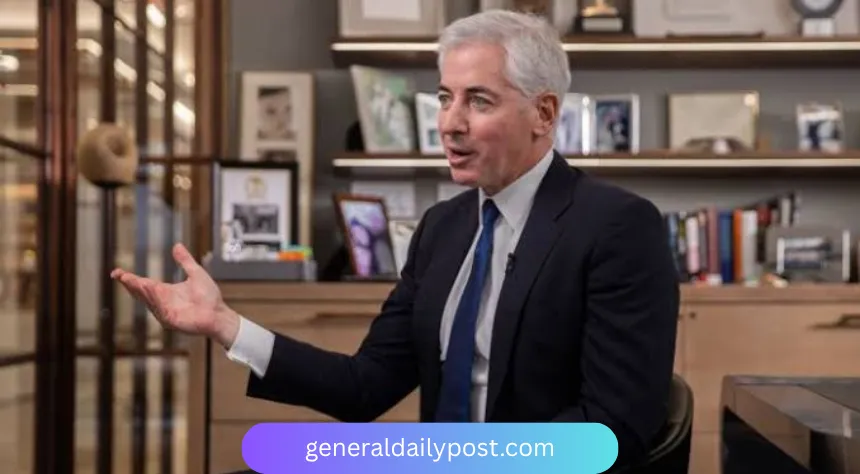
Ackman Investment Approach and Risk Management
bill Ackman is associated with concentrated investing, which means committing substantial capital to a relatively small group of businesses. He also became known for shareholder activism, using ownership stakes to advocate changes in corporate decisions. Concentration makes understanding each investment especially important because a serious error can affect the wider portfolio. A notable example of risk management came in March 2020, when Pershing Square reported exiting protective hedges for $2.6 billion in proceeds, against approximately $27 million in premiums and commissions. Those proceeds belonged to the funds, rather than being Ackman’s personal earnings. The episode illustrates how portfolio protection can operate alongside ownership of companies during a severe market shock.
Investment Setbacks and Public Scrutiny
Ackman’s record includes costly disappointments, particularly Valeant Pharmaceuticals and his campaign against Herbalife. Pershing Square announced the sale of its remaining Valeant investment in March 2017, explaining that the position required a disproportionate amount of time and resources. His Herbalife position also ended at a loss. These episodes matter because a biography built only around successful trades would misrepresent the uncertainty of professional investing. Public confidence, detailed research, and persuasive presentations do not guarantee a correct outcome. In comparing Bill Ackman and Tiger Woods, the useful lesson is that an established reputation can coexist with serious setbacks, and that later performance should be assessed separately from earlier acclaim.
Tiger Woods Early Life and Family
Eldrick Tont Woods, known worldwide as Tiger Woods, was born on December 30, 1975, in Cypress, California. His parents, Earl and Kultida Woods, helped shape his early life and connection to golf. Earl served in the United States Army, while Kultida came from Thailand. Woods developed his skills from childhood and entered competitive golf long before turning professional. His upbringing became part of his public story because fans watched his development over many years. Bill Ackman and Tiger Woods therefore reached adulthood through different kinds of preparation: Ackman followed a university and investment route, while Woods had already established an exceptional competitive golf record before beginning his professional career.
Amateur Success and Stanford University
Woods’s amateur record gave strong evidence of his ability before major professional victories made him a global figure. He won three consecutive U.S. Amateur championships from 1994 through 1996, an extraordinary achievement in American amateur golf. He entered Stanford University in 1994 and won the NCAA individual championship in 1996. Later that year, he turned professional. These milestones explain why his arrival attracted attention: expectations rested on repeated results against strong competition. For readers studying Bill Ackman and Tiger Woods, this period also shows the value of examining the years before fame. Woods’s professional breakthrough followed an established history of tournament experience, rather than appearing suddenly without preparation.
The Historic 1997 Masters Victory
The 1997 Masters transformed Woods’s standing in professional sport. At 21, he became the youngest Masters champion, winning at Augusta National by a tournament-record 12 strokes over Tom Kite. The margin demonstrated how decisively he had outplayed the field, while his age made the result even more striking. His victory also carried cultural significance for a sport with a history of exclusion. The achievement remains a central reference point in his biography because it combined a first major championship with an immediately recognizable record. When discussing Bill Ackman and Tiger Woods, this is the clearest example of Woods delivering a result that changed public expectations about his future.
Major Championships and the Tiger Slam
Tiger Woods’s career record includes 15 major championships and 82 PGA Tour victories, tying Sam Snead for the most wins on that tour. His major total consists of five Masters titles, four PGA Championships, three U.S. Opens, and three Open Championships. The Tiger Slam describes his holding all four men’s professional major titles simultaneously after winning the 2001 Masters, following three major victories in 2000. Those wins occurred across two calendar years, so the achievement differs from a calendar-year Grand Slam. Bill Ackman and Tiger Woods are measured in different ways, and these established tournament records provide a firmer basis for assessing Woods than general claims about fame or financial success.
Comebacks Injuries and Recent Developments
Woods won the 2019 Masters, his first major title since 2008, after years interrupted by physical difficulties. Subsequent problems included serious leg injuries from a 2021 car crash, an Achilles tendon rupture in 2025, and further back surgery. As of October 26, 2026, a Reuters report dated October 22 described Kevin Kisner’s expectation that Woods could use TGL and possible December appearances to build toward more competitive golf in 2027. That was a reported expectation, rather than confirmation of a Masters start. His September 2026 legal resolution also included driving-license suspensions. These developments make careful distinctions between completed achievements, current participation, and possible future appearances essential to an accurate biography.
Business Interests Beyond Their Main Careers
The careers of Bill Ackman and Tiger Woods extend beyond investment selection and tournament play. Ackman holds corporate leadership responsibilities, including his role at Howard Hughes Holdings. Woods’s wider enterprise includes TGR Design, which develops golf courses, alongside events and hospitality interests. Such activities show how professional recognition can support opportunities in related industries. However, a public profile does not explain every business result, and company revenue should not be confused with personal income. Their work also involves teams and institutional partners. A useful comparison therefore considers the organizations around each man, rather than treating every commercial achievement as the product of one individual acting alone.
Philanthropy and Community Impact
Philanthropy provides another meaningful connection between Bill Ackman and Tiger Woods. The Pershing Square Foundation, established in 2006, supports work in areas including health, education, economic development, and innovation. TGR Foundation, founded in 1996 by Woods and his parents, focuses on educational opportunity. Its Learning Labs and related programs help students explore subjects, prepare for college and careers, and build practical skills. In 2026, TGR Foundation marked its thirtieth anniversary. These initiatives deserve attention alongside professional milestones because they identify specific ways resources reach people beyond investors and golf spectators. Their impact should be evaluated through the programs delivered and opportunities created, with institutional claims distinguished from independently measured outcomes.

Conclusion
Bill Ackman and Tiger Woods offer two distinct accounts of achievement under public scrutiny. Ackman’s biography centers on investment management, corporate influence, and the consequences of concentrated decisions. Woods’s story rests on a documented sporting record, including historic major victories and repeated efforts to compete through physical setbacks. Their charitable organizations add another dimension to their public work. The strongest comparison recognizes these differences while examining shared pressures such as preparation, judgment, and reputation. Readers can appreciate their accomplishments without assuming every decision succeeded or that past results predict future performance. Accurate biographies depend on that balance, especially when current business roles and possible sporting comebacks continue to change.
Who are Bill Ackman and Tiger Woods
Bill Ackman and Tiger Woods are American public figures known primarily for investment management and professional golf, respectively. Ackman founded Pershing Square and became recognized for concentrated investments and campaigns seeking changes at companies. Woods became one of golf’s most successful players, with a record that includes major championships and decades of influence on the sport. Both also participate in business and charitable activities beyond their original professions. Their names can appear together in a comparative biography, but that framing should not imply a joint venture. Understanding each person begins with his separate career, the institutions involved, and the particular achievements that can be checked against reliable records.
What is Bill Ackman best known for
Bill Ackman is best known as the founder and chief executive associated with Pershing Square and as a prominent activist investor. Activist investing involves using a shareholding to press for changes intended to improve a company’s direction or value. His career also includes investment research, portfolio management, corporate board responsibilities, and philanthropy. Public attention has followed both successful decisions and significant losses, which makes a balanced description especially useful. Bill Ackman and Tiger Woods share high visibility, but Ackman’s professional results relate to investment portfolios and business decisions. A single successful trade, a social-media statement, or a wealth estimate cannot provide a complete measure of that record.
How many major championships has Tiger Woods won
Tiger Woods has won 15 men’s major championships, comprising five Masters, four PGA Championships, three U.S. Opens, and three Open Championships. These victories are part of his wider total of 82 PGA Tour wins. A major victory counts within that tour total when it is a recognized PGA Tour event, so the two figures should not be added together as separate sets of wins. His most recent major title remains the 2019 Masters in the records reviewed for this article. For a comparison of Bill Ackman and Tiger Woods, those distinctions matter because accurate sporting totals are more informative than broad descriptions such as legendary or dominant.
Are Bill Ackman and Tiger Woods business partners
The sources reviewed for this article do not establish that Bill Ackman and Tiger Woods are business partners. The article brings them together to compare their biographies and professional influence. That editorial choice is not evidence of a shared company, investment, or formal collaboration. Ackman’s documented roles involve Pershing Square and other corporate responsibilities, while Woods’s official biography identifies his golf and TGR activities. A claim about a specific relationship would need a direct announcement, company filing, or another reliable source identifying both parties and the arrangement. Readers should apply the same standard when encountering combined-name articles elsewhere, particularly when headlines suggest a connection without explaining its basis.
What is the net worth of Bill Ackman and Tiger Woods
There is no single audited public figure that establishes the exact current personal net worth of Bill Ackman and Tiger Woods. Published estimates can change with investment valuations, private business assumptions, property values, and other factors. Ackman’s funds manage assets belonging to investors, so those assets should not be counted as his personal fortune. Similarly, Woods’s tournament earnings are only one part of his finances and do not directly reveal his wealth after expenses and taxes. A useful wealth comparison must identify the publisher and valuation date behind each estimate. This biography therefore prioritizes verified career information rather than presenting an undated number as an established financial fact.
What can readers learn from their careers
The careers of Bill Ackman and Tiger Woods support a practical discussion of preparation and judgment, although their experiences cannot guarantee similar outcomes for others. Ackman’s investment history illustrates how detailed analysis can still lead to costly errors and why the size of a position matters. Woods’s record demonstrates the value of developed skill while showing how injury can change even an exceptional athlete’s opportunities. Their charitable work also offers examples of building organizations around public causes. These are interpretations of their documented experiences, rather than personal rules attributed to either man. The most useful approach is to study the evidence, recognize circumstances, and avoid reducing complicated lives to a simple success formula.
