



Larry Silverstein and Albert Bourla built their reputations in different worlds: New York real estate and international pharmaceuticals. Silverstein became closely associated with rebuilding the World Trade Center, while Bourla became internationally recognized through his leadership of Pfizer during the COVID-19 pandemic. Their biographies offer two distinct accounts of responsibility during extraordinary events. Understanding their careers requires looking beyond prominent buildings, corporate titles, and headlines to their education, professional development, and organizations. This article examines their backgrounds, major decisions, and continuing work, using official biographies, institutional records, and dated announcements. It compares their experiences without suggesting that their separate careers form a shared business venture.
Larry Silverstein’s Early Life and Education
Born in Brooklyn in 1931, Larry Silverstein developed his career within the city that would eventually become inseparable from his public identity. His educational background included Brooklyn Law School, where he graduated in 1955. Legal training provides useful context for understanding a career involving leases, financing agreements, property rights, and negotiations. However, a qualification alone cannot explain the persistence required to develop major buildings. Silverstein’s story unfolded through practical experience and relationships as well as formal study. For readers exploring Larry Silverstein and Albert Bourla, this early chapter establishes an important difference: Silverstein approached his industry through property and legal experience, rather than the scientific education that shaped Bourla.
Establishing Silverstein Properties
Silverstein founded Silverstein Properties in 1957, beginning a professional journey that would extend across several generations. Real estate development involves more than purchasing land or commissioning an attractive building. Developers must coordinate investment, planning, construction, leasing, and ongoing management while accepting uncertainty about future demand. The company’s official values emphasize perseverance, integrity, and optimism, presenting these as qualities associated with its founder. Such descriptions reflect the organization’s own perspective, but the long duration of Silverstein’s career is independently visible in its projects and institutional history. His rise illustrates how an entrepreneur can build influence through repeated decisions over decades, gradually developing the relationships and organizational capacity needed for increasingly complex work.
The World Trade Center Lease in 2001
A defining event occurred in July 2001, when Larry Silversteinand his investment partners took a 99-year lease on the World Trade Center. The transaction was valued at approximately $3.25 billion. Only weeks later, the terrorist attacks of September 11, 2001, destroyed the Twin Towers and devastated the surrounding site. Describing the agreement accurately matters: it was a leasehold transaction involving partners, rather than a simple purchase of every asset associated with the complex. The tragedy transformed a major commercial undertaking into a reconstruction challenge of national significance. For Silverstein, the next stage demanded negotiations and long-term commitments in circumstances profoundly different from those anticipated when the agreement was signed.
Rebuilding Lower Manhattan
The rebuilding effort became the central public chapter of Silverstein’s career. It involved public authorities, architects, engineers, construction workers, financial institutions, tenants, and communities affected by the attacks. 7 World Trade Center opened in May 2006, providing an early, visible milestone in the area’s recovery. Other buildings followed through separate projects and agreements. The development history also records a 2006 agreement under which Silverstein relinquished development rights to the Freedom Tower, now One World Trade Center, and Tower 5 in exchange for arrangements supporting Towers 2, 3, and 4. This distinction prevents an oversimplified account that credits every building to one person. His contribution was substantial, but reconstruction was a collective undertaking.
Larry Silverstein’s Family and Continuing Role
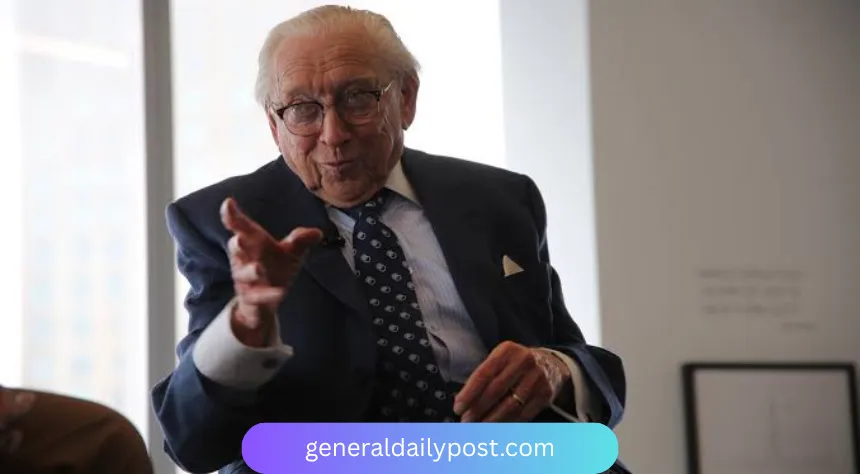
Larry Silverstein personal and professional histories overlap through his family’s involvement in the company. His wife, Klara Silverstein, has been a longstanding presence in his life; the company records their 70th wedding anniversary in July 2026. Their daughter Lisa Silverstein became CEO in 2023, while Larry remains founder and chairman. These roles should not be confused: being a founder or chairman does not automatically mean serving as the current chief executive. The distinction is useful when comparing Larry Silverstein and Albert Bourla, since Bourla holds both chairman and CEO positions at Pfizer. Family continuity also introduces another dimension to Silverstein’s biography: sustaining an institution beyond its founder’s original period of leadership.
A World Trade Center Update for 2026
A significant recent development concerns 2 World Trade Center. On February 25, 2026, New York State announced plans for a new American Express global headquarters at the site. The announcement identifies Silverstein Properties as developer, with the building on Port Authority land under a long-term ground lease. American Express is identified as the future sole occupant, and completion is expected in 2031. That date remains a projection, not a completed achievement. The distinction matters because biographies often repeat old claims about unresolved projects or present planned buildings as finished. This announcement provides a dated milestone in Silverstein’s continuing connection with Lower Manhattan, while preserving the uncertainty inherent in a major construction schedule.
Albert Bourla’s Greek and Jewish Background
Albert Bourla was born in Thessaloniki, Greece, in 1961, into the city’s Sephardic Jewish community. His parents survived the Holocaust, a family history that he has discussed publicly through educational institutions and remembrance initiatives. This background is an important part of his biography, rather than a detail to reduce to corporate publicity. It connects his upbringing to a community that suffered devastating losses during the Nazi occupation of Greece. Larry Silverstein and Albert Bourla therefore bring different geographical and generational experiences to their public lives. Bourla’s later international career began from this Greek setting, before his work at Pfizer took him across countries and increasingly large areas of organizational responsibility.
Veterinary Training and Scientific Education
Before becoming a pharmaceutical executive, Bourla qualified as a Doctor of Veterinary Medicine and earned a Ph.D. in the Biotechnology of Reproduction at Aristotle University. His education offers a useful corrective to the assumption that every pharmaceutical leader begins as a physician treating human patients. Veterinary medicine also concerns biological systems, disease, research, and the evaluation of evidence. These disciplines provided a scientific foundation for his professional development, although managing a global company required additional commercial and organizational experience. In a comparison of Larry Silverstein and Albert Bourla, education helps explain their different starting points: one career developed around property and legal agreements, while the other began with scientific study and animal health.
Joining Pfizer and Advancing Internationally
Bourla joined Pfizer in 1993, initially working in its animal-health organization. Over time, his responsibilities expanded into larger commercial and leadership positions. Pfizer’s corporate disclosures describe experience across five countries, illustrating the international character of his progression. Such movement matters because pharmaceutical organizations operate across different healthcare systems, regulatory frameworks, and markets. Before reaching the top position, he also led established-products and innovative-health operations. This was a long internal career rather than the arrival of an outside founder. Unlike Silverstein, Bourla did not establish the organization he now leads. His professional rise instead reflects advancement within an existing multinational company through roles that combined scientific familiarity, operational management, and commercial responsibility.
Becoming Pfizer CEO and Chairman
Bourla became Pfizer’s CEO in January 2019 and chairman in January 2020. The separate dates are important because many short biographies incorrectly merge the appointments. He previously served as chief operating officer during 2018, providing another step in the documented leadership timeline. As CEO, he directs the company’s management; as chairman, he also leads its board. These responsibilities involve corporate strategy, investment priorities, and accountability to shareholders, alongside the wider consequences of decisions affecting healthcare. Pfizer’s leadership materials describe a focus on research and innovation. That is the company’s stated strategy, while the eventual value of individual investments depends on evidence, regulatory decisions, execution, and the performance of products over time.
The Pfizer–BioNTech Vaccine During COVID-19
The pandemic placed Bourla’s leadership under exceptional public attention. Pfizer partnered with BioNTech on a COVID-19 vaccine that received its first U.S. emergency use authorization on December 11, 2020. The development and authorization involved scientists, clinical-trial volunteers, manufacturing specialists, regulators, and other contributors; Bourla’s role was executive leadership rather than personally inventing the vaccine. Emergency authorization also differs from full regulatory approval, which followed for the Pfizer-BioNTech vaccine in August 2021 for the initially approved population. Keeping these distinctions clear strengthens an accurate biography. It explains why Bourla became a recognizable public figure while acknowledging both the collaborative nature of scientific development and the independent responsibilities of regulatory agencies.
Cancer Research, Recognition and Public Responsibility
Bourla’s career extends beyond the pandemic. Pfizer completed its acquisition of Seagen in December 2023, at an enterprise value of approximately $43 billion, strengthening its commitment to oncology. Acquisitions create opportunities, but anticipated benefits are not the same as demonstrated future results. Bourla also received the 2022 Genesis Prize and directed his $1 million award toward the Holocaust Museum of Greece in Thessaloniki. These developments represent different aspects of his public life: corporate investment and remembrance. Comparing Larry Silverstein and Albert Bourla reveals a broader question about leadership: how should individuals with substantial organizational influence balance ambitious projects, public expectations, and responsibility to the communities touched by their decisions?

Conclusion: Larry Silverstein and Albert Bourla
Larry Silverstein and Albert Bourla offer contrasting biographies linked by leadership during moments of unusually intense public attention. Silverstein’s career centers on real estate development and a prolonged commitment to rebuilding part of New York. Bourla’s story moves from veterinary education in Greece to executive leadership in global pharmaceuticals. Neither account is fully explained by one headline, one project, or one corporate title. Their organizations depend on many contributors, and their legacies remain open to continued evaluation. As of November 3, 2026, official leadership records identify Silverstein as founder and chairman of Silverstein Properties and Bourla as Pfizer’s chairman and CEO. Their different paths make comparison informative without implying a shared enterprise.
FAQ: Who Are Larry Silverstein and Albert Bourla?
Larry Silverstein is a real estate developer, best known for his connection with the World Trade Center and the redevelopment of Lower Manhattan. Albert Bourla is a pharmaceutical executive, best known as Pfizer’s chairman and chief executive officer. Their names belong to separate professional histories, although both became closely associated with organizations operating during major historical events. A joint biography works best as a comparison of backgrounds, responsibilities, and career milestones. It should not suggest that they founded the same organization or worked on the same defining project. Understanding the distinction helps readers interpret search results accurately and appreciate how two different industries create different forms of influence and public accountability.
FAQ: What Is Larry Silverstein Best Known For?
Silverstein is especially known for the 2001 World Trade Center lease and his subsequent role in rebuilding the area after September 11. His involvement includes the redevelopment of office buildings and negotiations with the many organizations responsible for the wider site. However, his career began decades earlier with the establishment of Silverstein Properties. Reducing his biography entirely to the lease overlooks the professional experience that preceded it and the family company that continued afterward. Readers should also distinguish his role from that of public authorities and other developers. World Trade Center ownership, ground leases, construction responsibilities, and operating arrangements are complex, so a description of the entire site as one person’s property is misleading.
FAQ: Is Albert Bourla a Medical Doctor?
Bourla holds a Doctor of Veterinary Medicine qualification and a Ph.D., rather than a medical qualification identifying him as a physician treating human patients. The distinction does not diminish his scientific education; it explains its specific field. His professional development then took him from animal health into broader pharmaceutical management and executive leadership. Readers sometimes encounter the title “Dr. Albert Bourla” without an explanation of these credentials, which can cause confusion. A precise biography should state both qualifications and the university associated with them. It should also separate academic expertise from corporate responsibility: leading Pfizer involves organizational decisions, while research and clinical care involve specialized teams with their own distinct roles and qualifications.
FAQ: Does Albert Bourla Own Pfizer?
Bourla leads Pfizer; he did not found it and does not own the entire company. Pfizer is a publicly traded corporation, with ownership distributed among its shareholders. A chief executive can hold company shares while remaining an employee and officer accountable through corporate governance arrangements. The same precision matters when comparing Larry Silverstein and Albert Bourla: leadership titles, founder status, personal holdings, and ownership of corporate assets describe different things. Pfizer’s financial resources should therefore not be described as Bourla’s personal wealth. For readers interested in compensation or stock ownership, dated corporate filings provide a more reliable starting point than unsourced celebrity-style estimates that combine salary, shares, corporate revenue, and assets into one misleading figure.
FAQ: What Are Their Current Professional Positions?
As checked on November 3, 2026, Silverstein Properties identifies Larry Silverstein as founder and chairman, while Pfizer identifies Albert Bourla as chairman and CEO. Silverstein’s daughter Lisa holds the CEO role at the family company, a transition recorded in its timeline in 2023. These details help prevent older biographies from being mistaken for current leadership information. Titles should always be tied to a date because responsibilities can change even when a prominent individual remains involved with an organization. For future publication updates, the companies’ leadership pages and formal corporate disclosures should take priority over an undated profile. A planned development or strategic target should likewise retain its future status until completion is confirmed.
FAQ: How Do Their Careers Compare?
The clearest comparison is between entrepreneurial development and corporate executive leadership. Silverstein built a property company and worked through projects involving land, buildings, finance, and tenants. Bourla advanced within an established pharmaceutical company whose work depends on research, clinical evidence, manufacturing, and regulatory authorization. Both careers involve substantial uncertainty and the coordination of specialized teams, but their responsibilities are not interchangeable. Their crisis-related prominence also arose in different circumstances: reconstruction after a terrorist attack and pharmaceutical leadership during a pandemic. Studying Larry Silverstein and Albert Bourla together is useful when those differences remain visible. Their biographies show how professional preparation, institutional structures, and historical circumstances shape what leaders can attempt and how their contributions should be assessed.
