


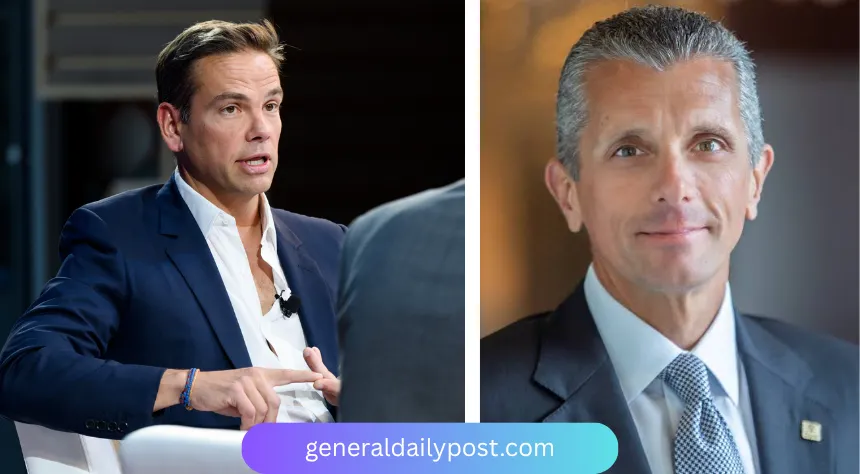
Lachlan Murdoch and David Cordani have built influential careers in industries that affect everyday life: media and healthcare. Murdoch’s story involves a famous family, international media businesses, and the challenge of guiding established brands through technological change. Cordani’s journey follows a different route, from accounting and operational management to almost seventeen years leading a major health company. Their current positions reflect another difference. As of October 20, 2026, Murdoch remains executive chair and CEO of Fox Corporation and chair of News Corp, while Cordani serves as executive chair of The Cigna Group following his July 2026 departure from the CEO role. This biography examines their backgrounds, achievements, responsibilities, and leadership transitions.
Lachlan Murdoch’s Early Life and Education
Lachlan Keith Murdoch was born on September 8, 1971, in London, to media businessman Rupert Murdoch and author and journalist Anna Murdoch. He grew up largely in New York, where his father’s expanding business made newspapers and broadcasting part of the family’s everyday surroundings. His education eventually took him to Princeton University, where he graduated in 1994 after studying philosophy. This background combined unusual access to international business with an academic discipline concerned with reasoning and difficult questions. However, his later career would require practical experience beyond university. Understanding Lachlan Murdoch and David Cordani begins with recognizing these different starting points: one entered a prominent business family, while the other developed his career through professional and corporate roles.
Lachlan Murdoch’s Early Media Career
Murdoch’s early working years involved substantial responsibilities across the family’s media businesses. He held senior executive positions during 1994–2005, later serving as deputy chief operating officer from 2000 to 2005. His responsibilities included television stations and publishing operations, giving him experience with businesses that depended on audiences, advertising, and distribution. He also served as publisher of the New York Post and oversaw interests including HarperCollins and Australian operations. These assignments placed him close to the commercial decisions behind familiar media brands. For a young executive, the challenge was broader than understanding news content: it involved managing costs, supporting growth, and coordinating different businesses within a large international organization.
Independent Investments and His Return to Senior Leadership
In 2005, Murdoch founded Illyria, a private investment company, opening a separate chapter in his business career. Through Illyria, he acquired a 50 percent interest in DMG Radio in 2009, followed by the remaining half in 2012. The radio business later became NOVA Entertainment. These investments expanded his experience as an owner and investor beyond his earlier corporate assignments. He subsequently held major leadership positions at 21st Century Fox, becoming co-chair in 2014 and executive chairman in 2015. His career therefore included both family-controlled public companies and independent investment activity. That combination helps explain his approach to evaluating media assets, corporate structure, and opportunities for expansion.
Fox Corporation, Streaming, and Business Strategy
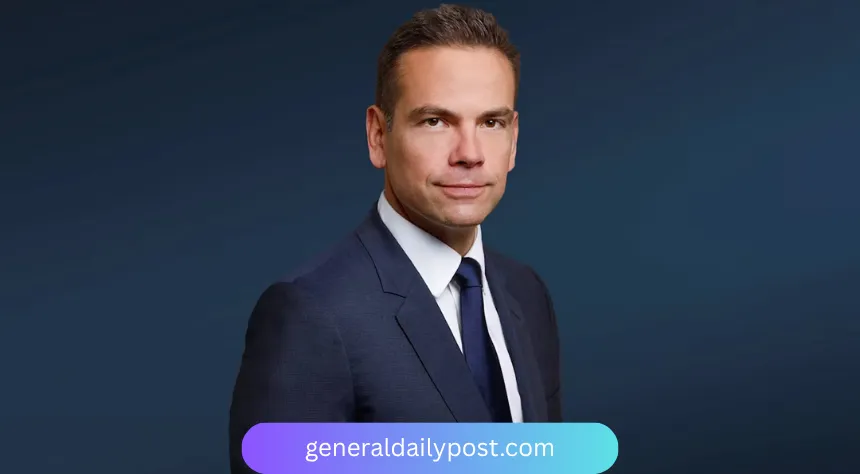
The modern Fox Corporation emerged as a separate public company in 2019, alongside the completion of Disney’s acquisition of major 21st Century Fox assets. Murdoch helped establish the new company, whose businesses concentrated on news, sports, entertainment, and television stations. A significant subsequent move was Fox’s acquisition of Tubi, completed on April 20, 2020. Tubi brought an advertising-supported streaming service into the group, adding a different way to reach audiences. The strategic significance is straightforward: viewers could watch through an internet service while advertisers gained another route to potential customers. This illustrates a recurring challenge in Murdoch’s career—maintaining established media businesses while investing in newer methods of distribution.
A further development came on June 15, 2026, when Fox announced an agreement to acquire Roku, valuing the proposed transaction at approximately $22 billion in enterprise value. The announcement described a combination of Fox’s content and streaming businesses with Roku’s television platform and customer relationships. It projected completion in the first half of 2027, subject to shareholder and regulatory approvals and other conditions. Accordingly, the announcement should be described as an agreed, proposed acquisition, rather than treated as evidence of a completed purchase. For readers studying Lachlan Murdoch and David Cordani, it offers another example of how large transactions can become defining decisions in an executive’s career.
Family Succession and Murdoch’s Growing Authority
Murdoch’s leadership position strengthened when Rupert Murdoch became chairman emeritus in November 2023, and Lachlan became News Corp’s sole chair. Another important development followed in September 2025, when Fox announced a resolution of litigation concerning the Murdoch Family Trust. The announced arrangements placed voting authority over the Fox and News Corp shares held by LGC Holdco with Lachlan through his appointed managing director, with the relevant trusts established through 2050. These arrangements concerned particular shareholdings and voting rights; they did not mean he personally owned every asset of either company. The distinction matters because executive office, voting authority, and economic ownership are related but different forms of corporate influence.
David Cordani’s Background and Education
David Cordani’s early career developed through business education, accounting, and an increasing interest in healthcare. A Texas A&M University graduate from the class of 1988, he later earned an MBA from the University of Hartford. A Texas A&M Foundation profile describes how the 1987 stock market crash prompted him to reconsider plans for a Wall Street career and add an accounting major. After graduation, he joined Coopers & Lybrand, where work with financial-services and healthcare clients helped shape his professional interests. The experience provided a practical foundation for understanding organizations through their finances and operations. Compared with Murdoch’s early exposure to family-owned media businesses, Cordani’s initial route was rooted in professional training and client work.
David Cordani’s Rise Through Cigna
Cordani joined Cigna in 1991 and built his career through a succession of internal leadership positions. His responsibilities included customer segments and marketing, the presidency of Cigna HealthCare, and the chief operating officer role. According to the company’s current board biography, he served as chief executive officer from 2009 until July 2026 and became board chair in January 2022. This long progression gave him experience across several parts of the organization before and during his time at the top. His biography demonstrates how sustained work inside one company can produce broad institutional knowledge. For Lachlan Murdoch and David Cordani, operational experience preceded their most prominent leadership responsibilities, although their routes into those organizations differed considerably.
Transforming Cigna Through Acquisitions and Health Services
A defining event during Cordani’s leadership was Cigna’s combination with Express Scripts, completed on December 20, 2018. The transaction expanded the company’s pharmacy-related capabilities and helped reshape its business beyond traditional health insurance. Further changes included the launch of Evernorth in 2020 and the introduction of the The Cigna Group corporate identity in 2023. Under that structure, Cigna Healthcare represented the health-benefits business, while Evernorth Health Services covered pharmacy, care, and benefits solutions. These developments explain why describing Cordani only as an insurance executive misses part of his career. His leadership involved building and coordinating a broader collection of services, with different customers, operating requirements, and commercial relationships.
Athletic Interests, Community Work, and Leadership Values
Outside corporate management, Cordani has developed a public profile through endurance sports and community involvement. His work with Achilles International has included guiding athletes with disabilities, including wounded veterans, through races. These experiences also informed the book he co-authored, The Courage to Go Forward: The Power of Micro Communities. In a 2026 Texas A&M leadership interview, he discussed trust, integrity, listening, and the responsibility that comes with leading others. These are his publicly expressed principles, rather than independent proof of every management outcome. Nevertheless, they offer useful insight into how he explains leadership: set a direction, prepare carefully, support the people involved, and adjust when circumstances change.
Comparing Lachlan Murdoch and David Cordani’s Leadership
The careers of Lachlan Murdoch and David Cordani offer two different perspectives on corporate leadership. Murdoch’s experience combines family succession, investment decisions, and responsibility for influential media brands. Cordani’s record centers on internal advancement, healthcare services, and organizational transformation. Both careers include acquisitions and changing business models, but their companies serve different needs. Media businesses compete for attention, distribution, and advertising, while health-benefits and services businesses must coordinate complex relationships involving customers, employers, clinicians, and other organizations. A reasonable interpretation of their career histories is that both needed to balance continuity with change. Neither biography supports the idea that one leadership formula automatically works across every industry or organization.
Public Scrutiny, Accountability, and Business Challenges
A balanced biography of Lachlan Murdoch and David Cordani must consider accountability alongside achievement. Fox’s responsibilities include the accuracy and consequences of its news output. In April 2023, Fox agreed to a $787.5 million settlement with Dominion Voting Systems over false election-related claims, a major event during Murdoch’s leadership. In healthcare, Cigna’s own 2025 “Commitments to Better” initiative identified priorities including simpler access, better support, value, and transparency. These are distinct issues, but both illustrate why business success requires assessment beyond company size. Audiences and healthcare customers experience the consequences of corporate decisions directly. Revenue growth, acquisitions, and shareholder returns therefore provide only part of the evidence needed to judge a leader’s record.

Conclusion
Lachlan Murdoch and David Cordani illustrate different routes to influence in major corporations. Murdoch developed his career through media operations, investing, and succession within a prominent business family. Cordani advanced through accounting and healthcare management before guiding Cigna through a lengthy period of expansion and restructuring. Their stories also remain active rather than complete: Murdoch continues in executive leadership, while Cordani’s move to executive chair represents a new stage of involvement. The most useful assessment combines their backgrounds, documented decisions, achievements, and responsibilities. Looking beyond familiar surnames or impressive titles makes it easier to understand how their careers developed and why their choices matter to employees, customers, investors, and the wider public.
Frequently Asked Questions
Who Are Lachlan Murdoch and David Cordani?
Lachlan Murdoch and David Cordani are business leaders associated with media and healthcare, respectively. Murdoch leads Fox Corporation as executive chair and CEO and chairs News Corp. Cordani is executive chair of The Cigna Group after a long tenure as its chief executive. Their names can be discussed together in a comparative business biography because both have held leadership responsibilities at large public companies. However, their professional histories are distinct, and this comparison does not establish a partnership between them. Murdoch’s career is closely connected with the development and succession of his family’s media interests, while Cordani’s reflects decades of advancement within Cigna and its evolving health-services businesses.
Is David Cordani Still the CEO of Cigna?
No. David Cordani stepped down as CEO effective July 1, 2026, and became executive chair of The Cigna Group’s board. Brian Evanko succeeded him as chief executive, following service as president and chief operating officer. Cigna announced the transition on March 3, 2026, and its current board biography confirms Cordani’s subsequent role. This distinction is essential when reading older articles, conference profiles, or interviews that still describe him as CEO. His move did not represent a complete departure from the organization: he retained a senior board position. A current biography should therefore separate his historical achievements as chief executive from the responsibilities associated with his later executive-chair role.
What Is Lachlan Murdoch’s Role at Fox and News Corp?
Lachlan Murdoch is executive chair and CEO of Fox Corporation and chair of News Corp. These are separate public companies, and his position at one should not be confused with his position at the other. News Corp identifies Robert Thomson as its chief executive, while Murdoch chairs its board. At Fox, Murdoch combines the executive-chair and CEO positions. The difference helps readers understand how corporate responsibilities are organized: a board chair leads the board, while a chief executive leads management of the business. Murdoch’s influence also involves voting arrangements associated with significant family-linked shareholdings, but those arrangements are separate from the formal titles attached to his executive and board appointments.
What Are Their Most Significant Career Achievements?
Important milestones for Lachlan Murdoch and David Cordani include helping reshape the companies they led. Murdoch participated in establishing the modern Fox Corporation and oversaw its expansion into advertising-supported streaming through Tubi. Cordani led Cigna during its combination with Express Scripts and the development of a broader health-services organization. In announcing his succession, Cigna credited his tenure with growth from approximately $18 billion to $275 billion in annual revenue. That is a company-reported comparison and should not be confused with profit or personal wealth. Evaluating these achievements also requires considering integration, customer experience, financial performance, and the lasting consequences of the decisions behind that growth.
What Are Lachlan Murdoch and David Cordani’s Net Worths?
A reliable comparison requires more than online estimates or executive salary figures. The sources reviewed for this biography do not establish comprehensive, directly comparable personal net-worth totals for Lachlan Murdoch and David Cordani. Public filings can disclose compensation, certain shareholdings, and ownership arrangements, but they do not necessarily reveal every personal asset or liability. In Murdoch’s case, family trusts and voting arrangements make it especially important to distinguish control from individual economic ownership. For either executive, a large annual compensation package does not equal accumulated wealth. Any published estimate should therefore identify its source and valuation date and explain whether it refers to an individual, a family, or disclosed investments alone.
What Can Readers Learn From Their Careers?
The careers of Lachlan Murdoch and David Cordani show why leadership should be studied through decisions and responsibilities as well as titles. Murdoch’s experience highlights ownership, succession, and adaptation within media. Cordani’s journey demonstrates the value of developing knowledge across several functions inside an organization. Their histories also suggest useful questions for aspiring leaders: How well do you understand the business? What changes are customers experiencing? Which capabilities should the organization develop next? These are interpretations of their career records, rather than guaranteed formulas for success. The strongest practical lesson is to connect strategy with execution and accountability, recognizing that large corporate decisions affect people far beyond the executive office.
