



Barry Sternlicht and Bobby Murphy represent two different routes to building influential American businesses. Sternlicht established his reputation through property investing and hotel brands, while Murphy helped create Snapchat and remains a central figure at its parent company, Snap Inc. Their stories bring together finance, design, software, and changing consumer habits. This article compares their individual biographies rather than presenting them as a founding team. Understanding their achievements means looking beyond wealth rankings to examine education, ownership, product development, and the responsibilities that come with growth. Together, their careers offer a useful view of how founders turn specialized knowledge into businesses that reach customers around the world.
| Profile | Barry Sternlicht | Bobby Murphy |
|---|---|---|
| Main field | Real estate investment and hospitality | Software, communication, and augmented reality |
| Best known for | Starwood Capital Group and hotel brands | Co-founding Snapchat and Snap Inc. |
| Education | Brown University; Harvard MBA | Stanford University, mathematical and computational science |
| Key business milestone | Founded Starwood Capital in 1991 | Helped launch Snapchat in 2011 |
| Leadership focus | Investing, financing, and building hospitality brands | Technology development and engineering |
Barry Sternlicht’s Early Life and Education
Born on November 27, 1960, in New York City, Barry Sternlicht grew up in Stamford, Connecticut. He graduated from Brown University in 1982 and earned an MBA with distinction from Harvard Business School in 1986. Brown’s alumni coverage identifies his undergraduate field as Law and Society, an interesting foundation for someone later associated with property finance and hotel design. His education therefore combined broad study with formal business training. Before establishing his own investment firm, he worked in finance and at Chicago’s JMB Realty. Those early positions exposed him to acquisitions and the practical importance of financing, providing the professional background for his later move into independent real estate investing.
Founding Starwood Capital Group in 1991
Barry Sternlicht founded Starwood Capital Group in 1991, during the savings and loan crisis, when troubled financial institutions and property owners were selling assets. The opportunity involved finding properties whose purchase price left room for recovery and improvement. Starwood’s official history records $52 million in closings for its first two opportunity funds in 1992. In 1993, those funds contributed most of their apartment portfolio to Equity Residential, connecting early private investments with a public property company. These milestones show how the business developed through both acquisitions and carefully chosen exits. The broader lesson is that buying an inexpensive property is only the beginning; financing, management, and the eventual sale also shape an investment’s outcome.
Building W Hotels and a Hospitality Legacy
Sternlicht founded Starwood Hotels & Resorts Worldwide in 1995 and helped turn hotel design into a stronger part of the guest experience. His achievements included creating W Hotels, expanding St. Regis, and introducing innovations such as the Westin Heavenly Bed. These efforts connected the financial side of hospitality with details that guests could immediately understand: comfort, atmosphere, and a recognizable brand. His departure requires precise dates. A contemporary company announcement confirms that he stepped down as CEO in 2004 and resigned as executive chairman in May 2005. Marriott subsequently completed its acquisition of that original Starwood Hotels company on September 23, 2016, an important distinction when discussing the businesses bearing the Starwood name today.
Barry Sternlicht’s Business Leadership in 2026
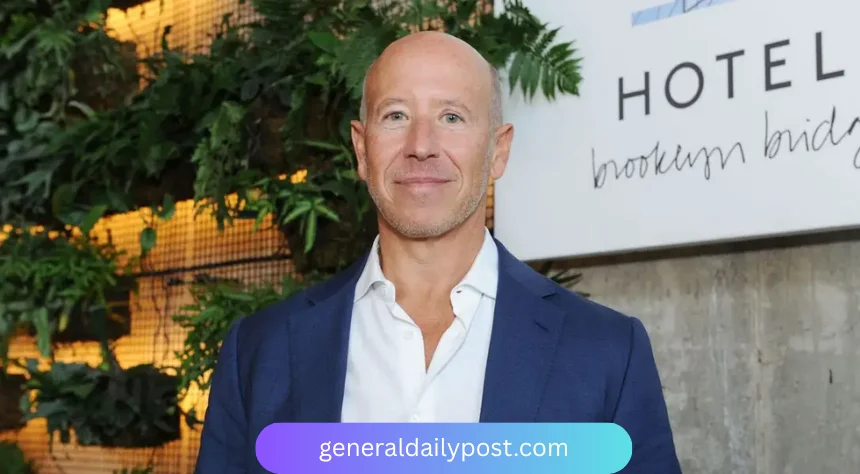
As of this article’s review, Barry Sternlicht remains chairman and CEO of Starwood Capital Group. On July 1, 2026, the firm announced that Starwood Distressed Opportunity Fund XIII had closed with commitments exceeding $10.2 billion, bringing reported assets under management to approximately $130 billion. The announcement identified residential property, data centers, industrial buildings, and hospitality among the fund’s target areas. Separately, his newer hotel management business, founded as SH Group in 2008 and now called Starwood Hotels, operates the 1 Hotels, Baccarat Hotels, and Treehouse Hotels brands. This business is distinct from the original Starwood Hotels & Resorts acquired by Marriott. The distinction helps readers follow his continuing involvement in both investment management and hospitality.
Bobby Murphy’s Early Life and Background
Bobby Murphy, whose full name is Robert Cornelius Murphy, was born on July 19, 1988, in Berkeley, California. Reporting on his background describes him as the son of state employees and notes that his mother emigrated from the Philippines. He attended Saint Mary’s College High School, which identifies him as a 2006 alumnus. These details place his early life in the San Francisco Bay Area before his association with a globally recognized technology company. They also help distinguish the engineer behind Snapchat from the app’s more visible public identity. His later career would center on building technology rather than becoming its chief public spokesperson, although his influence includes both technical leadership and company ownership.
Stanford University and Murphy’s Technical Foundation
Bobby Murphy graduated from Stanford University in 2010, earning a Bachelor of Science in Mathematical and Computational Science. At Stanford, he met Evan Spiegel, who would become his business partner. The combination of mathematics and computing provides relevant preparation for developing software, analyzing complex systems, and approaching technical problems methodically. A Stanford course page offers a particularly interesting connection: it states that Murphy wrote the first code for Snapchat in a course previously taught as Scalable Web Programming. That detail highlights the relationship between classroom work and practical experimentation. His route into entrepreneurship illustrates how university connections and technical ability can come together around a product idea, even before a company has a settled business model.
Snapchat’s Origins and Its Public Market Milestone
The service that became Snapchat began in 2011 as Picaboo, according to Snap’s original stock offering documents. Its central idea was picture messaging designed around content that disappeared, offering a different experience from maintaining a permanent social profile. Bobby Murphy contributed the technical expertise needed to develop the application alongside Evan Spiegel. The company also acknowledged Reggie Brown’s contribution to Snapchat’s creation in a 2014 statement. As the product grew, the business moved from an early app project into the public markets. Snap’s 2017 initial public offering was priced at $17 per share, with trading beginning on March 2, 2017. That milestone created a public market for shares in the company behind Snapchat.
Bobby Murphy’s Technology Role and Augmented Reality
Snap identifies Robert Murphy as co-founder, chief technology officer, and a director, with his CTO and board service dating to May 2012. His continuing role places him within a company whose ambitions now extend well beyond picture messaging. In January 2026, Snap announced Specs Inc. as a distinct, wholly owned subsidiary intended to sharpen its focus on augmented reality eyewear. On June 16, 2026, the company introduced its new SPECS augmented reality glasses. Augmented reality adds digital information or objects to a person’s view of their surroundings. These developments provide current context for Murphy’s work, while remaining company achievements that depend on many engineers, researchers, designers, and other contributors.
Barry Sternlicht and Bobby Murphy: Comparing Business Models
The clearest difference between Barry Sternlicht and Bobby Murphy lies in how their businesses create and capture value. Starwood Capital invests in real assets and related opportunities, where purchase prices, borrowing costs, operating income, and sale proceeds matter. Snap generates most of its revenue from advertising, with subscriptions providing another source of income. Its business therefore depends on attracting users and offering services that advertisers and paying customers value. In practical terms, a property investor may improve a building’s income or financing, while a technology company may improve an application’s usefulness and commercial tools. This comparison is an interpretation of their business models: both require careful allocation of resources, but their operating conditions differ substantially.
Wealth, Ownership, and Corporate Control
Discussions of Barry Sternlicht and Bobby Murphy often focus on money, but several financial measures need separating. Assets under management describe investments managed by a firm; they are not the founder’s personal fortune. Similarly, a company’s total stock market value belongs economically to all its shareholders, rather than to one executive. Ownership also differs from voting control. Snap’s 2025 annual report states that Spiegel and Murphy together controlled more than 99% of voting power as of December 31, 2025. That is a dated governance disclosure, not a statement that they owned 99% of the company’s economic value. Understanding these distinctions gives readers a more accurate picture of influence, financial exposure, and founder wealth.

Philanthropy and Contributions Beyond Business
Philanthropy provides another documented dimension of these biographies. Barry Sternlicht and Mimi Reichert Sternlicht supported Brown University’s health and wellness center and residence hall, with the completed facilities dedicated in 2021. The project connected student housing with services supporting physical and emotional well-being. Bobby Murphy, meanwhile, is associated with the Snap Foundation, established in 2017 with lasting financial support pledged by Snap and its founders. The foundation currently describes its mission as developing pathways into the creative economy for underrepresented young people in Los Angeles. These activities show different approaches to giving: support for a university wellness environment and support for young people’s creative education and career opportunities. Each is clearer when described through its actual institutional purpose.
Conclusion: What Barry Sternlicht and Bobby Murphy’s Careers Show
Barry Sternlicht and Bobby Murphy demonstrate how different kinds of expertise can support influential businesses. Sternlicht’s career links property transactions with hotel concepts that customers recognize through design and comfort. Murphy’s career connects software development with a communication platform and a continuing push into augmented reality. Their biographies also show why business success should be examined through more than a single wealth estimate. Education, partnerships, ownership, product choices, and the ability to manage changing conditions all deserve attention. The most useful lesson is to understand the problem a business solves and the resources required to solve it well. Their achievements provide examples to study, while their industries continue to demand adaptation and sound judgment.
Frequently Asked Questions
Who are Barry Sternlicht and Bobby Murphy best known as?
Barry Sternlicht is best known as the founder of Starwood Capital Group and an influential creator of hotel businesses and brands. Bobby Murphy is best known as a co-founder of Snapchat and Snap Inc., where his professional identity centers on technology. Their names belong to separate company histories, making this a comparison of entrepreneurs in different industries. For someone encountering them for the first time, the easiest distinction is their work: Sternlicht builds investment and hospitality businesses, while Murphy develops the technology behind a communication company. Looking at the businesses associated with each person provides more useful context than treating both simply as wealthy executives.
Which hotel brands are associated with Barry Sternlicht?
Barry Sternlicht created W Hotels and helped expand St. Regis during his leadership of the original Starwood Hotels business. His work is also associated with recognizable guest experience innovations, including the Westin Heavenly Bed. His newer hotel platform includes 1 Hotels, Baccarat Hotels, and Treehouse Hotels. These names span different stages of his career, so they should not be presented as one unchanged ownership group. Marriott acquired the original Starwood Hotels & Resorts in 2016, while his later hospitality business developed separately. Following that timeline explains why Sternlicht can be linked historically to familiar Marriott brands while remaining active through another hotel company today.
Is Bobby Murphy the CEO of Snapchat?
Bobby Murphy is Snap’s chief technology officer, while Evan Spiegel is its chief executive officer, according to the company’s current leadership page. Both are co-founders and serve on the board. The distinction matters because a founder does not automatically hold the CEO title, and executive responsibilities can be divided between partners. A CTO’s role generally centers on technology strategy and development, while a CEO holds broader responsibility for running the company. Murphy’s importance therefore should not be judged only by how often he appears publicly. His executive position and board membership establish that he remains part of Snap’s leadership, even though Spiegel occupies the chief executive role.
What did Barry Sternlicht and Bobby Murphy study?
Barry Sternlicht studied Law and Society at Brown University before earning his Harvard MBA. Bobby Murphy completed a Stanford degree in Mathematical and Computational Science. Their subjects reflect different academic routes into entrepreneurship: one combined a broad undergraduate education with business training, while the other developed a technical foundation relevant to software. These backgrounds help explain the kinds of work associated with their careers, although a degree alone does not account for a company’s success. Practical experience, collaboration, and decisions made after university also matter. Their education is best understood as preparation that each founder applied in a different professional setting over time.
How did Snap’s stock market debut affect Murphy’s career?
Snap’s initial public offering in March 2017 marked its transition into a publicly traded company. The initial offering price was $17 per share, and Snap’s subsequent closing announcement reported $3.91 billion in gross proceeds, including shares sold after underwriters exercised their additional purchase option. That total included sales by both the company and selling shareholders; it was not Murphy’s personal payout. The milestone made public reporting and a traded share price part of the company’s continuing story. For readers following Murphy’s biography, it also explains why discussions of his ownership became closely connected to stock market movements rather than only to private fundraising valuations.
What is the net worth of Barry Sternlicht and Bobby Murphy?
An exact current net worth cannot be established from the company disclosures used here. A useful estimate would need a named source, a valuation date, and a clear distinction between personal holdings and company assets. Murphy’s ownership in Snap makes its share price relevant, while valuing private investment interests introduces different uncertainties. Starwood Capital’s reported approximately $130 billion in assets under management in July 2026 must not be described as Sternlicht’s personal wealth. Likewise, Snap’s market value is not Murphy’s net worth. For an accurate biography, dated estimates can provide context, but they should never replace the underlying facts about ownership, business roles, and the source of a founder’s financial exposure.
